
The Blended Family
Margaret Jean Goodrich Watson (Jean) and her infant son, Billy, and Cyril Richardson Tifft (Cy) and his daughters, Elizabeth and Mary, experienced horrendous losses during World War II. Jean’s husband, William Wallace Watson II, died in June 1944 in a plane crash in southern China while he was on his way to a new posting an Assistant Naval Attaché to the United States Embassy in Chungking, China. Cy’s wife, Beatrice Anna Mathilda Hallberg (Bea), died of an undiagnosed heart condition in February 1946 while Cy was still stationed at a United States Army air base in Newfoundland. The war in Europe was already over, but Cy had not yet been released from duty. Despite pushback from his commanding officer, Cy got his discharge in March 1946, and began to rebuild his life without Bea.
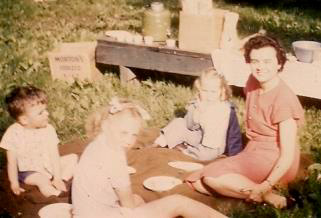
One Sunday during early 1947, about a year after Bea’s death, Cy Tifft, along with Liz and Mary, were on their way home from church when Mary, barely three at the time, asked her daddy if they could go to the store and buy a new mommy. Apparently Cy thought Mary had a good idea: by the end of May of that year he’d met Jean Goodrich Watson on a blind date arranged by mutual friends, and by early June, Jean and Cy were already thinking about marriage, or at least Liz thought (or perhaps wished) they were. On June 8, they took the three children—Liz, Mary, and Billy—on a picnic to get acquainted. Liz wrote in her diary that day that “Mrs. Watson, Billy, Mary, Dad and I packed a picnic lunch today. Mrs. Watson and Billy are going to be my mother and brother.” And then she ended with the fun part: “Well anyway we went to Battle Creek [a park in St. Paul]. After we ate we climbed in caves and slid on the sand out there.”
Two stories provided by Liz make it seem as though Jean and Cy’s relationship was preordained. The first involved Cy, who, shortly after his first date with Jean, was telling his fellow doctors at St. John’s Hospital that he’d “met the nicest lady.” Ted Watson (P. Theodore Watson), another doctor, was in the room. He must have been pretty surprised when he heard the name of Cy’s nice lady—Jean Watson, his older brother’s widow! Growing up, the Tifft kids and Watson cousins and our parents spent a lot of time together.

The second story involved Jean and her first husband Bill Watson. One day they were driving east on Highway 36 to spend the day in one of their favorite places, Stillwater, Minnesota. As they neared the intersection of Arcade Street and Highway 36, Jean looked up and said that someday she’d like to live in a house like the big white one on the corner. It was Cyril and Bea’s home. Imagine her shock when she realized in 1947 that the striking house on the hill at the corner of Arcade and Highway 36 would become her new home.

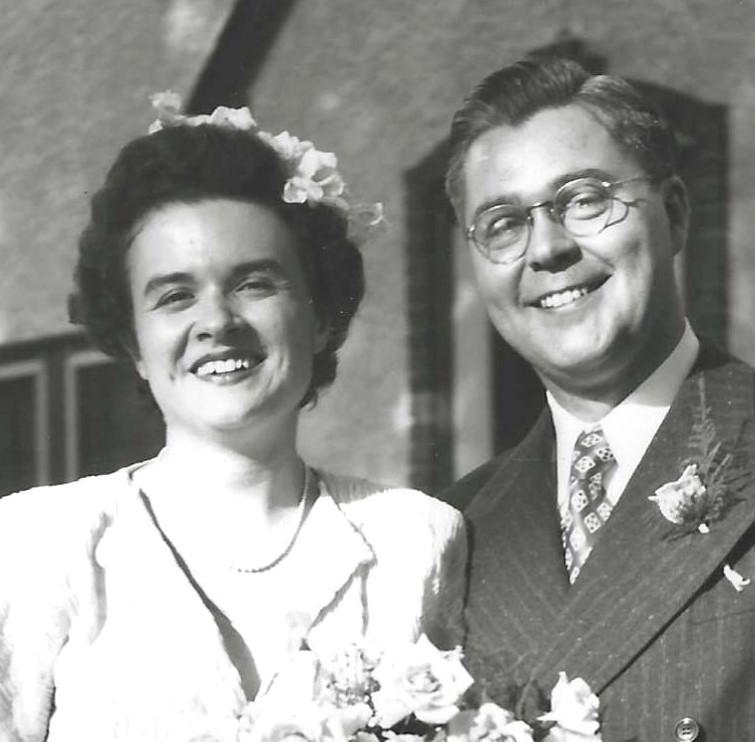
Jean and Cy wasted no time making up their minds about each other. They were married on August 27, 1947, at the Minneapolis home that Jean and Billy shared with Jean’s parents, Art and Cora Goodrich. After a wedding night at the Lowell Inn in Stillwater and a honeymoon road trip to the Broadmoor Hotel in Colorado Springs, Jean and Billy moved to their new home at 2195 Arcade Street (“on the corner of Arcade and Highway 36,” as we always said when giving directions to our home) in suburban St. Paul.

When Jean and Cy married, she was not quite thirty-one and Cy was forty. Overnight Jean became the mother of Liz, who was already ten, and Mary, who was three and one-half, just like Billy. As Jean would later say, two toddlers are considerably more than twice as big a challenge as one! Since the death of Bill Watson, Jean and Billy had shared a home with her mother and father, who helped Jean care for Billy while she was working. So not only did she lose the daily help of her parents, she had to learn to manage and work with the live-in housekeeper, Emma Sauter, who Cy had hired to take care of his daughters after Bea died. She also had to get to know her new mother-in-law, who was living with Cy, Elizabeth, and Mary. And, for good measure, she took over the financial management and bookkeeping for Cy’s medical practice. Cy took on the challenge of being a father to a three and one-half-year-old boy, supporting two more people, and getting to know a whole new set of in-laws.
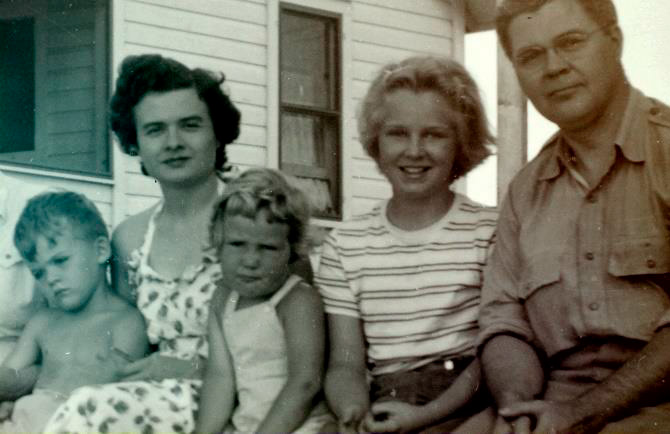
Their new circumstances must have seemed overwhelming to both of them, but they probably breathed a big sigh of relief knowing that they could be happy again, even after their first loves were taken from them. Though life changed dramatically for both Jean and Cy, they had found their beloved partners of the next fifty-five years.
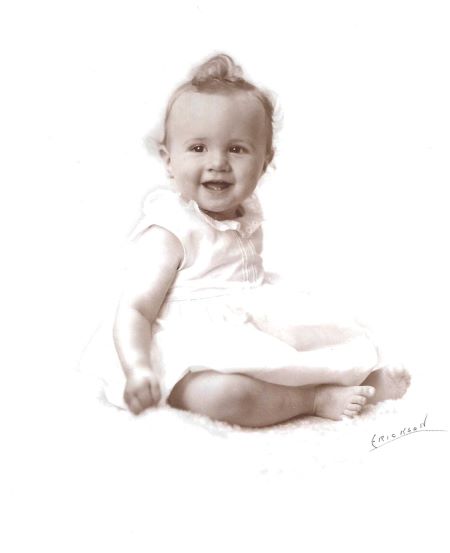
Nineteen forty-nine was a big year in the newly blended Tifft family. I was born on April 22, 1949, and then Jean and Cy finalized the adoption of one another’s children on September 9. Luckily, Cy and Jean had hearts and a home that were big enough for everybody.
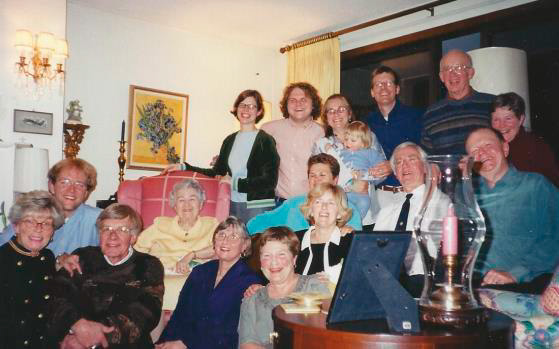
Among Jean and Cy’s many notable qualities, their inclusiveness stands out. As we were growing up, summer picnics were common, and at them, it was not unusual to see Tiffts, Goodriches, Hallbergs, and Watsons—the four branches of our blended and extended family—all mixed up together. The seven living grandparents got along well together, and soon learned to love all of the grandchildren, adding so much to all of our lives.
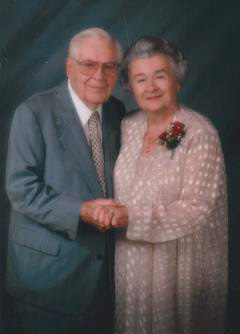
Later in life, Jean and Cy’s inclusiveness extended beyond the four families to their children’s spouses and their families. Even when their children divorced, their ex-spouses were welcome to continue to be members of the Tifft family.
Jean and Cy’s inclusiveness further extended to the foreign students they hosted from time to time and to whom we still remain connected. When I was in high school, we hosted a young woman from South Africa for a year while she attended high school with me. She has since moved to Canada and is still close to our family. A Dutch Fulbright scholar arrived next. Jean and Cy took him under their wings when he arrived in Minneapolis to attend the University of Minnesota in the late 1960s. Though he lived near campus, he spent much of his free time with the Tifft family that year. Once back in the Netherlands, he started his own family, and the Tiffts became part of it. The “Dutch family,” as we still refer to them, treated Jean and Cy like revered parents and grandparents. The relationship between the two families now spans four generations and well over a half a century.
The one thing, perhaps, that our parents did not deal with well was the grief, pain, and anger that resulted from Bea and Bill’s untimely deaths. Mom and Dad lost their first spouses at a time when people all over the world were suffering great loss as a result of World War II. It seems that “pick yourself up, dust yourself off, a start all over again” was much more than a popular song lyric; it was a mantra and a way of life during and after World War II.
Mom and Dad were busy getting on with life and, I believe, didn’t allow themselves the luxury of fully processing their grief. And apparently they didn’t think their children needed to process the loss of their parents at all, or they assumed that the children were young and resilient and would just get over it if they had a happy and stable home. Granted, only Liz was old enough to know at the time of her mother’s death what a great loss she had suffered. Mary was only two, but she surely missed her mommy, and knew that there was a mother-shaped hole in her life. Bill, an infant at the time of his father’s death, also surely felt grief for the father he didn’t get a chance to know, a father who became bigger than life in the lore of the Goodrich and Watson families after he died.
All of us knew at some level that this unprocessed grief underlay our otherwise happy family life. Even I felt it, despite the fact that I was lucky enough to have both of my parents until I was well into my fifties. I think Mom and Dad felt incredibly lucky to find each other after they and so many others had weathered such devastating loss and upheaval during the war. Instead of dealing with their grief, or that of their children, perhaps they simply decided to move on and try to be happy.
Despite the underlying unresolved grief that affected all of us in different ways, there is no doubt that Jean and Cy left a legacy of love—a love of family that extends well beyond our nuclear family, to four sets of grandparents, a wide assortment of aunts, uncles, and first, second, and third cousins, not to mention international family connections that have benefitted us throughout our lifetimes.
Visit our Ancestry.com family tree here.