
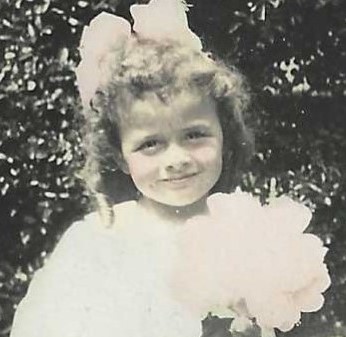
Margaret Jean Goodrich
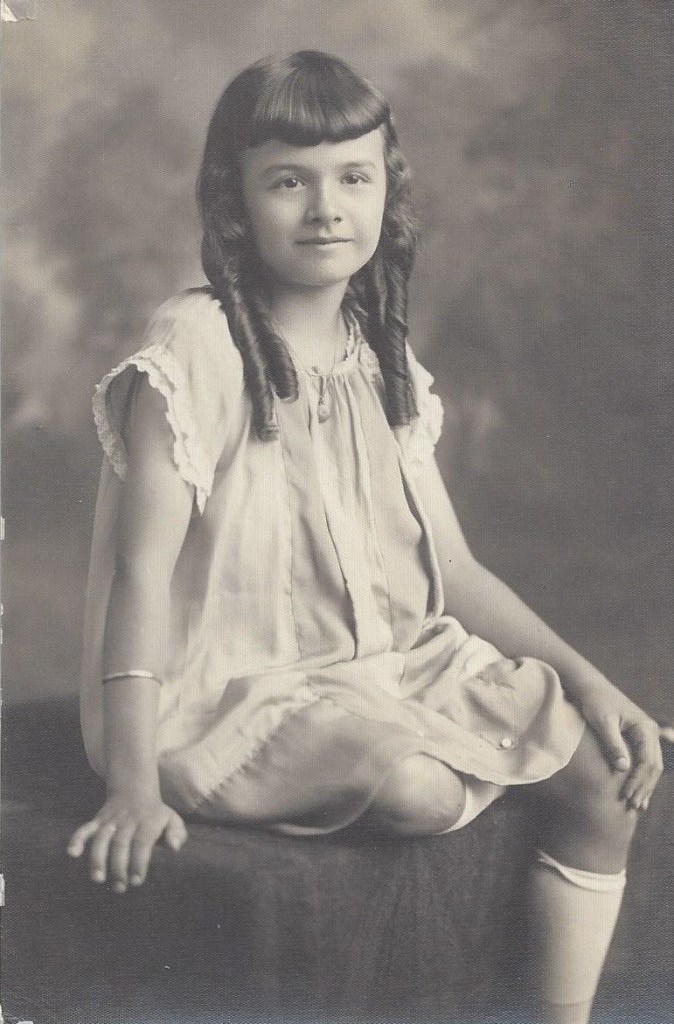
My half-brother Bill and I are the children of Margaret Jean Goodrich (1916–2008), or Jean, as she was always called. Bill is the son of Jean and her first husband, William Wallace Watson II. Jean’s husband Bill served in the Navy during World War II. He was killed in a plane crash in China in 1944, shortly after his son was born. I was born in 1949, about twenty months after my mother had married Cyril Richardson Tifft, a widower with two daughters, my half-sisters Elizabeth and Mary. Later in 1949, Jean adopted Elizabeth and Mary. At the same time Cy, as he was called, adopted my half-brother Bill.
Jean was born on September 16, 1916, at St. Barnabas Hospital in Minneapolis, Minnesota. She was the only child of Arthur (Art) William Goodrich (1883–1973) and Cora Lee Baker Goodrich (1883–1972). Though she was named Margaret after Cora’s mother, Margaret Ann Young Baker (1844–1938), she was referred to as “Jean” from birth because Cora did not want her to be called “Maggie” like her mother.
Cora was pregnant three times. Her first and third pregnancies ended in miscarriages. Jean, the result of Cora’s second pregnancy, was born about six weeks prematurely and weighed three pounds and nine ounces at birth. She was kept alive through the first year of her life by the devoted care of her parents. By her first birthday she was thriving. Jean’s parents, knowing that they had almost lost Jean, and then losing another baby by miscarriage, apparently stopped trying to have more children after the third attempt. Instead, they devoted themselves to caring for, educating, disciplining, and loving Jean, and as a result she was devoted to her parents throughout their lives. They were an unusually close threesome, with Art and Cora’s shared love for Jean, it seems, more than the love Art and Cora felt for each other, providing the glue that bound the three of them together.

Sections
- Family Background
- Early Childhood
- Childhood Homes
- Growing Up
- Family Vacations
- Education
- Early Adulthood
- First Marriage
- Second Marriage
- Living Alone for the First Time
Family Background
Cora Lee Baker and Arthur William Goodrich were both born in 1883. Cora was born in Hannibal, Missouri, where her father was employed by the railroad. Art was born in San Dimas, Los Angeles County, California, where his father, Lorenzo Goodrich (1854–1939) farmed a “dry ranch” —one that had no irrigation or ground water. He was unsuccessful. Cora and Art met in the early 1900s as young adults while living with their families in North Minneapolis, at the time, a working-class neighborhood with many Scandinavian and Jewish immigrants. The houses were sprawling and suited to large families like the Bakers and Goodriches.
Cora, whose father and brothers worked for the Northern Pacific Railroad as yardmen—they repaired the cars in the railroad yard rather than operating the trains—was given the luxury of completing high school. Attending and completing high school was somewhat unusual for the daughter of a working-class family, and surprising for Cora, whose father, Elijah Baker (1842–1897), had been killed when she was about fourteen, in a gruesome railyard accident. But in the Baker family, the two boys went to work at the railroad, following in their father’s footsteps, while the three younger daughters, Alice, Cora, and Edna, went to high school. I suspect this was the doing of their mother Margaret (Maggie) Ann Young Baker (1844–1938). She was a smart and strong-willed woman who kept her family afloat after her husband’s death through sheer grit. She undoubtedly wished she’d had more education herself. Oddly enough, despite hard times during much of her marriage and certainly after her husband was killed, Margaret Baker was genteel. She liked to have nice things around her, and passed those characteristics on to her daughter Cora and granddaughter Jean.
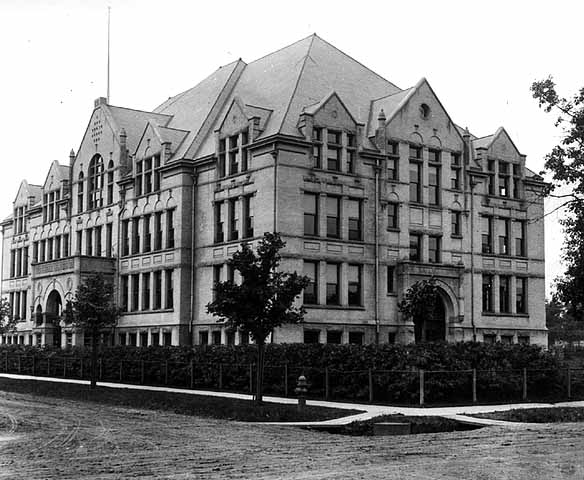
Cora graduated from North High School in the “Latin course” (as opposed to the English course, the literary course, or the vocational training course) in January 1903 when she was nineteen. She then went to work to as a clerk in a “transfer office” (we would probably call it a shipping office today) in downtown Minneapolis.
In 1896, the Goodrich family moved from Los Angeles, California to Pinehurst, North Carolina, a new resort town that had been founded just the year before on land that had been decimated by logging. There Lorenzo worked at a dairy farm and a plant nursery where ornamental plants were propagated for the new town. Lorenzo may have found the job in Pinehurst through a recruiting advertisement. In Pinehurst, there was no school for Art to attend after eighth grade so he became a printer’s apprentice at the resort newspaper. Whether that choice of career was Art’s or his father’s, we don’t know, but he stuck with it for the rest of his working life. The family moved to Minneapolis in late 1899 when Art was about sixteen. He quickly found work at Miller Publishing Company where he worked until his retirement fifty-four years later in 1953. (The Miller Publishing Company Weekly Bulletin, Vol. 49, No. 40, October 3, 1953) Art lived at home with his parents, went to night school to complete high school, and may have even taken some college-level courses.
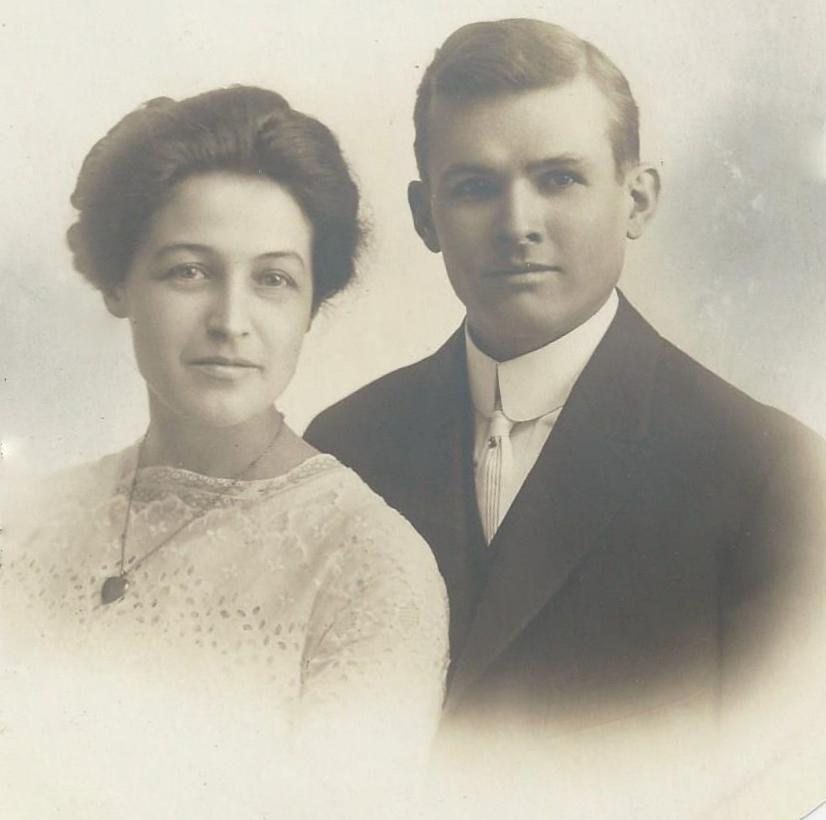
Art and Cora courted from the time they were about twenty, but waited until they were both almost twenty-eight to get married, so that they could live at home while they worked and saved to afford a home and family. They married at Cora’s home on July 7, 1911. After her marriage Cora may have continued to work for a time, but soon became a full-time homemaker.
Art and Cora, though technically working-class, were financially comfortable. Art was a skilled craftsman with a steady job. At home, he saved money by repairing almost everything and doing the heavy chores himself, and growing the family’s fruit and vegetables. Cora was a frugal and creative homemaker who could turn an old wool coat into a new coat for Jean, sew beautiful clothes for herself and her daughter, transform leftovers into excellent dinners, and can or pickle almost anything from Art’s garden so that they’d have home-grown food for the winter. Nothing went to waste in the Goodrich household. Between Art and Cora, they were able to create a comfortable life for themselves, and for their only child, Jean.
With the exception of a German great-grandfather on her father’s side and an Irish great-grandmother on her mother’s side of the family, Jean’s forebears were nearly all English immigrants who had arrived in the New England colonies between the mid-1600s and early 1700s.
Early Childhood
When Cora and Art brought baby Jean home from the hospital, probably when she was a few weeks old, it was late September or early October, just about when Minnesotans, like squirrels, had started preparing for a long cold winter. Jean was premature, tiny, and very frail. Her chances of surviving the winter were slim, but that didn’t deter Art and Cora from doing everything they could to save her.
Jean was so tiny that she couldn’t nurse, but there was nothing like prepared baby formula available, so her parents located a wet nurse who was willing to sell them milk. Several times a week on his way home from work, Art would take the streetcar to this woman’s house and buy milk for Jean’s next few days of feedings. Cora would then have had to keep it cold enough in the ice box to stay fresh for several days.
Many houses still lacked central heat, and if they had it, it was expensive and used frugally. Cora spent most of her day in the kitchen, which was probably closed off from the rest of the house, as was typical in those days. There, she could keep the heat in and the drafts out, and probably relied on her regular cooking and baking to keep the room toasty warm. Grandma Cora always told us that, when she wasn’t using the oven, she kept baby Jean tucked into a shoebox on the oven door, where the pilot light gave off just enough heat to keep her extra warm.

Art and Cora also avoided taking Jean out of the house during those first cold months of her life. They had to travel around Minneapolis by trolley since they had no car and they did not want to expose Jean to the cold or to germs on public transportation. Instead of taking Jean to the doctor during the first precarious months of her life, Art and Cora arranged for one of the few pediatricians in town to make regular house calls to check on her progress. The doctor insisted that they keep a bottle of whiskey on hand so that they could give Jean a drop to shock her into breathing if she ever stopped. Art and Cora were not drinkers themselves, and never had to resort to treating their baby with alcohol, but nevertheless, after each doctor’s visit the whiskey bottle was just a little less full. Grandma Cora characterized Jean’s doctor as “quite the dandy,” sporting a top hat and gold-topped cane when he made his rounds.
The first year of Jean’s life must have come at quite a price. Giving birth in the hospital was not all that common in 1916, and would have been expensive for a working-class family. Providing their baby with purchased mother’s milk and routine check-ups by a specialist making house calls must have also been expensive. Art and Cora must have made many sacrifices, both financial and personal, to save their precious daughter’s life.
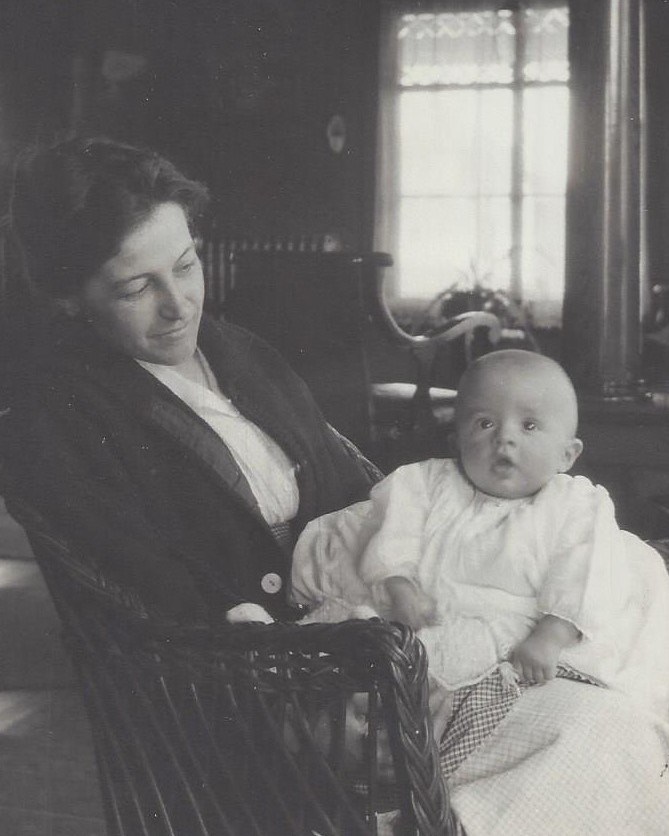
By the time she was one, Jean was still bald but thriving. She continued to be quite bald until she was eighteen months or two years old, which must have worried Cora, who was proud of her own luxuriant chestnut brown hair but by the time Jean was about three she had long brown hair. Cora would twist her naturally curly hair around rags to tame it into long ringlets.
During the first two years of Jean’s life, World War I had been raging in Europe and by 1918 the so-called Spanish Flu was raging worldwide, so it was a tense and dangerous time for everyone—which Jean apparently sensed from her parents’ conversations about current events. On November 11, 1918, when Jean twenty-six months old, the war ended. When the armistice was announced, church bells and rejoicing sounded throughout the country, and people poured into the streets to celebrate. According to Grandma Cora, when Jean heard the commotion outside, she stood up in her crib and proclaimed, “The bells and the thistles and the war is over!” There was no longer any doubt, if there ever had been any, that Jean’s premature birth had done no damage to her brain—and she was already keeping up with current events, which she would continue to do for the rest of her life.
Jean’ parents indulged her in many things, but never to the point of being spoiled—though I’m sure some of Jean’s older disapproving relatives thought that Art and Cora were literally “spoiling” her. For instance, Jean always had beautiful clothes, which, until after the Depression (when Jean was still in college), Cora made herself, often out of her old dresses and coats. Luckily for Jean, Cora was an excellent seamstress and she had good taste.
Another indulgence Jean enjoyed was raising “Munchie,” a baby squirrel that had fallen out of its nest. She found him as a little girl on a family walk through the neighborhood park. After they realized that “he” was still alive, Art wrapped him in his handkerchief and tucked him into his vest pocket to keep him warm, and they took him home, nursed him back to health, and let him have the run of the house—something I still can’t picture my grandmother Cora allowing. Within a few months, Munchie was grown and had become a “squirrelly nuisance” in Jean’s words. Sadly, she had to release him at a friend’s cabin in the woods, but the friends reported that Munchie continued to come back to be fed all summer, and eventually showed up with a mate. (More of Jean’s stories of her childhood will appear in future posts.)
Childhood Homes

As a child, Jean lived in two homes. The first, at 1411 18th Avenue North, was probably an apartment. The address appears on Jean’s birth certificate. It was only a fifteen-minute walk from both sets of grandparents, who lived on the same street, Fremont Avenue North; the Goodriches lived at 1217 and the Bakers just a couple of houses down, at 1211. By the time she was two or three, Jean and her parents had moved to her second home, a brown bungalow located at 3601 6th Avenue North, still within walking distance of Jeans’ grandparents. Sixth Avenue is now gone—paved over when Olson Memorial Highway was built across North Minneapolis.
Jean shared many memories of a very happy childhood at 3601 6th Avenue North in a memoir that she wrote in 1991 when she was seventy-five. There, according to her recollection, the grass was a perfect green carpet, her sandbox was always cool and shady, and her father grew perfect strawberries. It seems that the neighborhood children gravitated to her backyard and, as Jean wrote in her memoir, “I do not recall that the children ever fought or hit, the mosquitoes ever bit, or that it ever rained.” What a blessing to remember such an idyllic childhood.
Growing Up
Jean learned all of the housewifely skills from her mother, especially cooking. Both Jean and Cora were excellent and creative cooks. Both liked to try new recipes, so food never got boring and was rarely unappetizing (except when my mom cooked lima beans—yuck!). The one cooking task that Cora loved but Jean hated was baking. As an adult, Jean got out of baking whenever she could. Jean also learned the needle arts from her mother. She could sew, darn, embroider, knit, crochet, and do needlepoint. She never learned to enjoy the more mundane tasks of mending or darning, but she did like to knit and do needlepoint and, in her later years, took up weaving.
Jean’s father Art taught her to fish, swim, drive, and garden, among other things. According to Jean, her mother wanted her to have the independence of being able to drive, so her father taught her when she was fifteen and tall enough to be able to see over the steering wheel. She never grew to more than five feet two inches, so it is a wonder that she could reach the pedals at all. When Art taught Jean to swim, her mother wasn’t so eager for her to learn and insisted on her using “water wings” and held onto the back of her bathing suit to keep her safe. Grandma Cora’s anxiety ensured that Jean never became a competent swimmer, though she was comfortable paddling around in the water and was not afraid of it. She made sure all of her children learned to swim—and she didn’t hold on. She did not learn to ride a bike as a child, however, and could never get the hang of it as an adult. I’m not sure how it happened that her father failed to teach her to ride a bike. He was very athletic and undoubtedly had ridden a bike as a young man.
In addition to school, Jean took many special lessons at Cora’s insistence. She took piano lessons but never seemed to enjoy playing the piano—she claimed to have no talent. She also took ballet and tap dancing classes—as Cora said, “at least it will teach you to walk.” And she took elocution lessons—something that she learned very well. As she said, “I can still [at age seventy-five] project my voice to the back of large room without a mike.”
Family Vacations
From early in her life, Jean and her parents took vacations, which was unusual in the 1920s. It may have been possible because Art had a good job with a good company where the owners were concerned about the well-being of their workers. Their early vacations were simple and often included visits with family, but at the time any kind of vacation was a luxury many could not afford. Taking time off from work, staying at resorts and hotels along the road, owning an automobile to drive the family to its destination, and paying for gasoline all cost money many families simply didn’t have, and “needing a vacation” was just not something most people could even contemplate. As Jean recalled in her memoir:
For several summers when I was young, my mother and father packed up the old Essex (they got their first automobile in about 1925) and we drove the fifty miles west of Minneapolis to Lake Sylvia near Annandale where my mother’s sister [Alice] and her husband [William Evans] had a farm and a small resort. There we would stay for two weeks of vacation, boating, swimming, fishing, eating and idling away the hot days of summer.
As Jean grew up, she took many road trips with her parents, but their trips to the lake, and spending time with her father on those trips, was always special to her. One of her fondest memories was the of two of them going out in the rowboat to fish in the evening. As she wrote:
Each evening we’d set out just the two of us on a special trip. Dad would shove the boat off the shore and row the big, heavy flat-bottomed, wooden boat to his favorite bass fishing spot across the lake, near a bed of reeds. Then we would precariously change places and I would man the oars while he baited his hook and set up his rod and reel. Then it was my job to slowly and quietly propel the boat along the reeds as my dad cast his bait into the water, “plunk.” In those days, every few casts resulted in a ripple, a splash, a taut line, happy excitement, and a plump fish to add to the evening’s catch. Tomorrow’s dinner was assured!

During the summer of 1939, when Jean was twenty-two, she and her parents took their most memorable trip together. Art took an extended leave, and Jean either quit her job or was allowed an extended leave. They packed up the car and headed west. Jean and Art took turns driving—Cora had never learned to drive. Art took the wheel whenever the driving was hard, and would often end the day with broken blisters on the palms of his hands from turning the steering wheel without the help of power steering and from operating a manual shift up and down hills. They all wore nice clothes on road trips. Jean and Cora were in dresses and had handbags, hats, and gloves to put on when they got out of the car. Art wore dress pants and a dress shirt, and kept his suit coat, tie, and hat in the car so that he too could dress up when they got out of the car. But because tires went flat frequently and he had to change them, Art also kept a coverall in the car to protect his dress clothes.
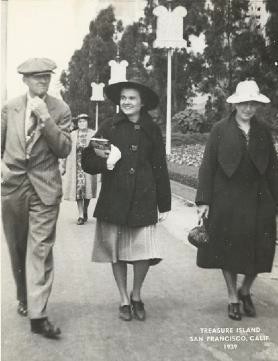
On the trip in 1939, they visited many national parks. Jean saw the Rockies, glaciers, and the ocean for the first time. They went to Vancouver, British Columbia where Art’s elder sister Sarah and her husband Walter Greene were lighthouse keepers. They may also have visited some of Art’s mother’s relatives—the Fesenfelds—in Washington state. They undoubtedly visited Seattle, where Cora’s youngest sister Edna and her husband Roy Chamberlin and her two younger cousins lived. And then they went to Monterey Park to visit Jean’s grandmother, Mathilda Fesenfeld Goodrich. Lorenzo had died earlier in the summer. Art’s younger sister Elinor Goodrich Miller nearby, and there Jean got to know her cousin Kathleen Miller, who was a few years Jean’s junior. They also stopped in San Francisco to see the sights. There they visited Treasure Island, where the World’s Fair had taken place and took one of my favorite photos of the three of them together. She had a particularly vivid memory of listening to radio news reports of Germany invading Poland while driving through New Mexico on September 1, 1939, and knowing that another wide-scale European war was inevitable.Jean always remembered that trip with great fondness.
Education
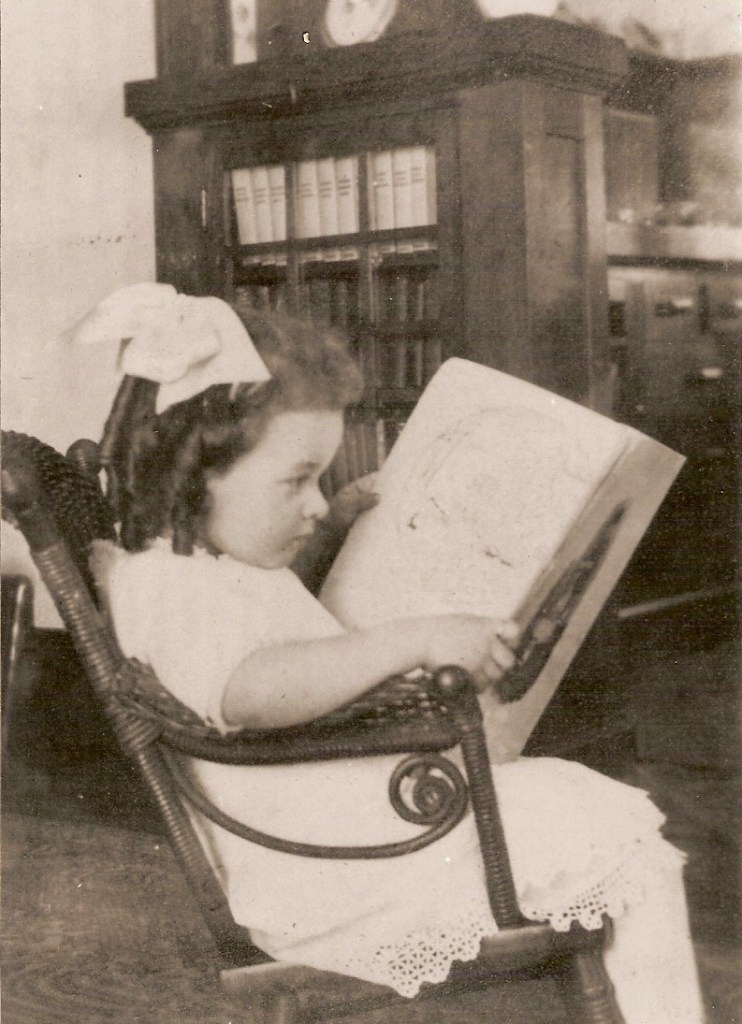
Art and Cora loved to read. They always subscribed to daily newspapers and listened to news on the radio to keep abreast of world events. Their home was full of books—mostly novels. Art was also fond of poetry, and for much of his life kept a small leather-bound book of verse in his pocket. Both Cora and Art had an excellent grasp of the English language. Cora’s grammar and spelling were just about perfect, and she was exacting when it came to the use of the English language. Art, despite his lack of formal education had a fantastic vocabulary and could define almost any word we could throw at him, even when he was so old that he routinely fell asleep mid-sentence. I have no doubt that they both read to Jean at an early age, and that they always made sure she had books around her. (Much more about Art and Cora in future posts)
It is no wonder that Jean’s education was Art and Cora’s highest priorty—especially when they realized how precoscious she was even as a toddler. In Jean’s memoir she characterizes her parents’ interest in her education:
Very early [my mother] and father made me understand that studying and doing well in school were important and that I would be going to college. Fortunately for us all, I was in agreement. [My mother’s] strong feeling was that every woman needed an education, a way to make a living and the experience of working and having her own money should she remain single, or later be widowed, or divorced.
Jean started kindergarten at McKinley School in North Minneapolis when she was five. Cora and Art undoubtedly made sure Jean knew her letters and her numbers before she started school, but apparently she didn’t know her name. Jean’s mother registered her as “Margaret Jean Goodrich” on the first day of school. According to Jean’s 1991 memoir, Jean’s teacher called her mother to express her concern that Jean wasn’t responding to directions. According to Jean, the conversation went like this:
“Mrs. Goodrich, do you realize that your little girl is deaf?” “Why do you think that?” my mother answered. “Well,” said Miss O’Gordon [the teacher], “when I speak to Margaret she never responds.” “Just call her Jean,” my mother answered, “and see what happens.”
That was the end of a hearing problem and the beginning of a long confusion of names and records. Am I Margaret Jean or Jean Margaret?

Jean was extremely bright. In elementary school she skipped several semesters because she’d learn the material so quickly. If the classroom was crowded she had to share a desk with another child because she was always one of the smallest children in the class. In about third or fourth grade, a little boy who had just emigrated from central Europe joined her class. He spoke no English, and needed help getting started in the American school, so the teacher seated him with Jean, and asked her to help him. Jean always proudly remembered that he was brilliant, and by World War II he had become a well-known physicist.
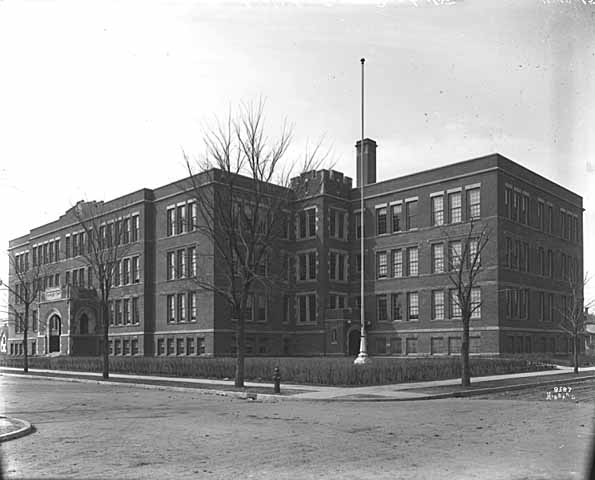
Jean graduated from North High School in Minneapolis in 1933—the same high school from which Cora had graduated thirty years earlier—at the age of sixteen, because she had skipped two full years in elementary school. Beatrice Hallberg Tifft, Cyril Tifft’s first wife, also graduated from “North” but she was eight years older than Jean so they did not cross paths in school. Jean was one of the few students in her class graduating with a nearly perfect grade point average. According to Jean, one of her classmates—possibly the only girl—whose GPA topped hers, had avoided tough academic courses and instead took a lot of home economics. Jean always told that story with complete disgust.

There is no doubt that Art and Cora were in full agreement on the subject of education for women, even though having Jean go to college instead of starting to work was a financial sacrifice, especially in 1933 at the height of the Depression. The Goodrich family was luckier than most though. During the Depression, Art, a master printer and a long-time employee of the Miller Publishing Company, kept his job. According to Art, the company wanted to keep it’s employees working, so all of the owners and supervisors took a pay cut, but kept working at their jobs, so that they could afford to pay more workers. Both Art and Cora were used to living frugally and “making do,” so when Art took a pay cut, they simply tightened their belts and kept on, refusing to let the Depression derail their aspirations for their daughter. She didn’t disappoint.

Jean was accepted at Carleton College, a train ride away in Northfield, Minnesota. She was offered a scholarship but it didn’t cover room and board or other expenses. Her parents couldn’t afford to pay the difference, so Jean went to the University of Minnesota in Minneapolis and lived at home instead. Jean did not work during college. It seems that her parents were able to pay Jean’s modest tuition at “the U” and that they even allowed her to indulge in luxuries. She joined a sorority, Alpha Chi Omega, as a day student. Her social life revolved around Alpha Chi and there she made many lifelong friends, including her best friend Doris Hagensick who would in the future, become “Auntie Doris” to us kids. She had beautiful clothes—most still made by her mother—and even owned a fur coat by the time she graduated from college.

In 1937, at age twenty, she earned a bachelor of arts degree with a major in economics and a minor in psychology. She graduated Phi Beta Kappa and magna cum laude. The only course that gave her any trouble was statistics—a fact that “galled” her throughout her life, especially after she learned bookkeeping and realized that she had a head for numbers. When I struggled with statistics in college, my mom was my biggest cheerleader and, like her, I later learned that I had a head for numbers.
Jean wanted to go on to graduate school in economics, but was discouraged from doing so by the chairman of the University economics department. He told her that it was a waste to give a woman a place in a graduate program instead of a man, because she would just get married and squander her degree. That was probably the last time Jean believed someone who told her she couldn’t do something. I suspect that if times had not been so lean, and her parents could have afforded to send her elsewhere for graduate school, Jean would have gone. She would have made a fantastic lawyer—as we kids can attest. We rarely won an argument with her.
Early Adult Life
Instead of going to graduate school, after she graduated from college, Jean took a secretarial and bookkeeping course so that she had marketable skills in addition to a solid college degree. I’m guessing that was Cora’s idea. Grandma Cora was always practical and found a way to make lemonade out of lemons.
Once Jean had completed her course, she got her first job as a secretary at the Bemis Bag Company in Minneapolis. The company made cloth flour sacks for the milling industry. I’ve always wondered if Jean’s father had something to do with her getting this job. He printed the Northwestern Miller, the premier trade magazine for the flour milling industry in Minneapolis, so he probably would knew his advertisers, one of which was the Bemis Bag Company.
Religion
Art, Cora, and Jean were Congregational. Cora had graduated from church school at the Pilgrim Congregational Church when she was nine, and in 1897 her father’s funeral service was conducted by the minister of Pilgrim Congregational Church, as was Art and Cora’s wedding in 1911. Oddly, I can find no history of the Pilgrim Congregational Church in Minneapolis, though there is a church of the same name in Duluth, Minnesota that was founded in 1871. When Jean was married in 1941, she was married at Plymouth Congregational Church a downtown church that was probably a bit more upscale, or perhaps replaced, Pilgrim Congregational. Later, when Art and Cora moved to South Minneapolis, they joined the neighborhood church, Lynnhurst Congregational. Belonging to a church seemed to be more a matter of propriety than deep religious conviction for the Goodrich family; though, if challenged, they would have proclaimed themselves to be staunch Protestants.
First Marriage
While Jean was very popular in college and dated several young men, she didn’t find the right man until the late 1930s, when she met William Wallace Watson II on a blind date arranged by her best Alpha Chi friend, Doris Hagensick Nelson, and Doris’ husband Floyd Nelson. Bill Watson was born in China to missionaries, Percy T. Watson, a physician, and Clara French Watson, an educator. Though Clara home-schooled all of her children in China, Bill learned to speak Mandarin while playing with children in the town. He came back to the United States to finish high school in Northfield, Minnesota, where his father had grown up, and then attended Carleton College, located just down the street from the Watson family home. He earned a law degree from Harvard in 1936, then returned to Minnesota. His first job as an attorney was with a Minneapolis law firm where he met his friend Floyd Nelson, another lawyer, who was instrumental in introducing Bill and Jean. Within a few years, Bill had become an assistant attorney general for Minnesota.

Jean and Bill were well-matched. Both were extremely smart and well educated. Both were interested in politics and world events, and they hit it off immediately. They were married on May 24, 1941, before the United States entered World War II. They had a small, informal wedding in a side chapel at Plymouth Congregational Church in downtown Minneapolis. They were dressed in their best spring clothes. According to Jean’s stories, they were crazy about each other, and in their wedding day photos, they both look like they’d hit the jackpot. After their marriage they settled into an apartment at 1735 Randolph Ave. in St. Paul. By all accounts, Bill had a great legal career ahead of him and the future was the young Watsons’ for the taking.
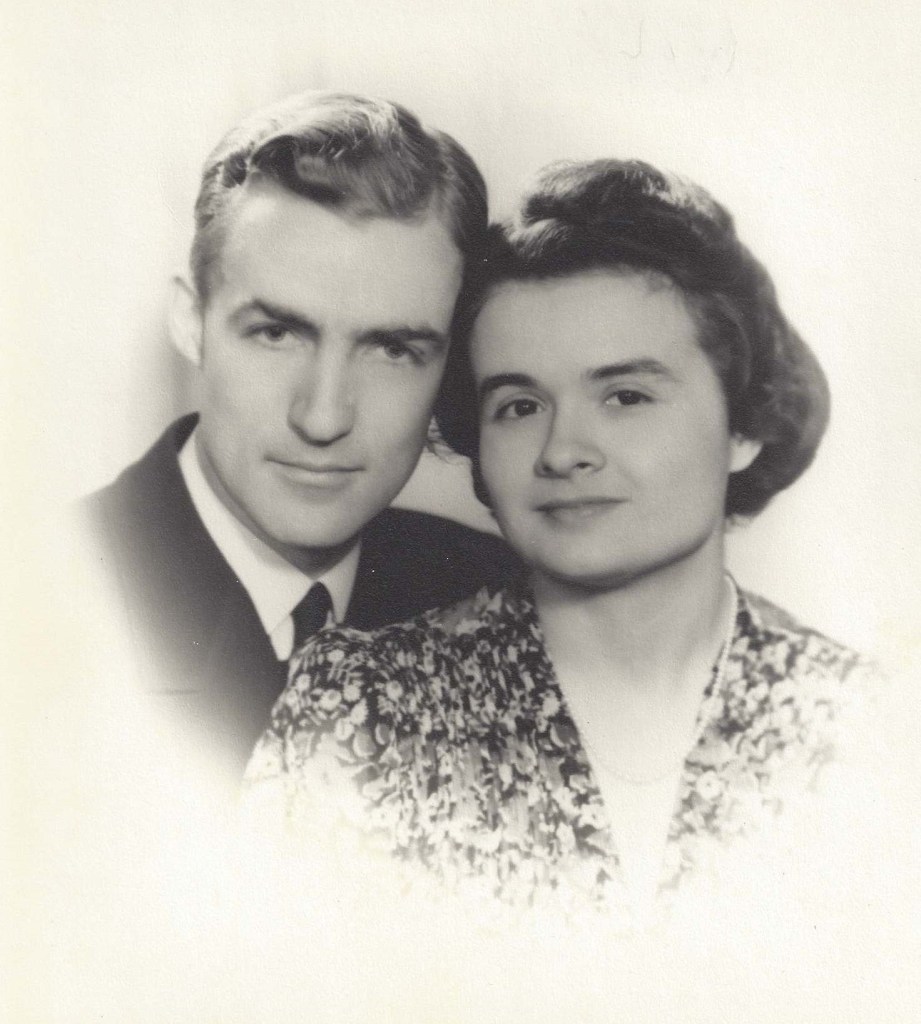
According to Bill’s service record, in March 1941, he joined the Minnesota Defense Force (the predecessor to the National Guard) as a private. In July 1941, only two months after his marriage, Bill applied to become a “Lieutenant (JG) Volunteer Naval Reserve, Special Service, Intelligence Dept.” By February 1, 1942 he was serving at the Great Lakes Naval Training Station in Chicago as a naval intelligence officer. Jean and Bill rented an apartment in downtown Chicago and Jean landed a job as an executive secretary for the Encyclopedia Britannica Company. They loved living in Chicago—a big metropolitan city in comparison to Minneapolis. In late April 1943, Bill requested a transfer to foreign duty in order to use his Chinese language skills. By early June he was on the move. He was sent to Maryland and New York City for additional intelligence training, then in early October, after a brief leave, Bill was given orders to report for duty in New Delhi where the joint Army-Navy Intelligence Collection Agency for China, India, and Burma was located.

Jean was pregnant, so she went back to Minneapolis to live with her parents in her childhood home to wait for the baby to be born. Bill and Jean’s son William Wallace Watson III (Billy) was born on January 26, 1944, while Bill was stationed in Asia. In late April 1944, Bill traded places with another officer to come back to the United States as a naval courier. Jean met him in New York, and they took an overnight train to Washington, D.C. where he was to report to the Vice Chief of Naval Operations. He arrived in New York with a briefcase manicled to his wrist. He could not remove it, so the young couple spent their first night together, according to Jean, with a briefcase nestled in bed with them. After a few days in Washington—where the briefcase was promptly removed by the appropriate official—they took the train home to Minnesota, where Bill Sr. met his four month old son, Bill Jr.
On his return to India, Bill was immeidately posted to the U.S. Embassy at Chungking (now Chongqing) the capital of Nationalist—or “free”—China where he was to serve as an assistant naval attaché at the U.S. Embassy. On June 16, 1944, Bill was the only passenger on a transport plane taking him on one of the standard routes between India and Nationalist China—from Calcutta to Chungking via Kunming. After crossing the lower Himalayas, the plane crashed in the mountains of the southern Chinese province of Kweichow (now Guizhou), and Bill was killed instantly. He was a month shy of thirty-three.

It turned out that Cora was prescient in her determination to raise Jean as a strong, independent woman. At the age of twenty-eight Jean was suddenly a widow with a four and one-half month old baby to raise. She needed to work, and she was equipped to do so. She quickly landed a job in the management training program at Dayton’s Department Store headquarters in downtown Minneapolis, working directly for one of the Dayton brothers, the owners of the store. She loved the job—and the employee’s discount too. Jean relied on her mother for childcare and her father to act as a father-figure for Billy. Fortunately for all of them, Jean got along well with her parents and was quite happy to continue to live with them, and Art and Cora were happy to have Billy and Jean at home. Jean was eternally grateful that her parents were willing to step in and help her in the first few years of her widowhood.

In the fall of 1944, Jean used the death benefit she’d received to help her parents buy a home at 5037 Girard Avenue South on the opposite side of Minneapolis. It was somewhat bigger than Jean’s childhood home in North Minneapolis, and it gave Jean and Billy more privacy on the second floor. There, Jean settled into the life of a working mother.
Jean had no expectation that she’d ever marry again. The love of her life was dead and she didn’t really believe she’d be lucky enough to find another husband after the war. After all, not too many unmarried able-bodied men were coming home.
Second Marriage

In May 1947, Jean met her second husband, Cyril (Cy) Richardson Tifft (1906–2002), on another blind date, this one organized by her sorority sister, Margaret Sarnecki, and her husband, Dr. Matt Sarnecki, Cy’s colleague. Cy was a St. Paul general practitioner and surgeon and a widowed World War II veteran with two daughters, Elizabeth, not quite ten and one-half, and Mary, not quite three and one-half. Cyril and Jean hit it off immediately. They were married on August 27, 1947 at Jean’s family home, a little more than three months after they’d met. Jean was almost thirty-one and Cy was a few months shy of his forty-first birthday. Twenty months later, on April 22, 1949, I (Margaret Jean Tifft) was born. On September 9, 1949, Cy adopted Billy and Jean adopted Elizabeth and Mary, creating one big blended family.

Jean settled into being a doctor’s wife, a pillar of the community, and the mother of three—soon to be four—active children. She was, I think, quite happy to be able to hire help so that she was not solely responsible for child care, housework, yard work, and household repairs—responsibilities she hadn’t had when living with her parents as a young working mother. Cy was simply too busy at the height of his career to be bothered with domestic concerns.
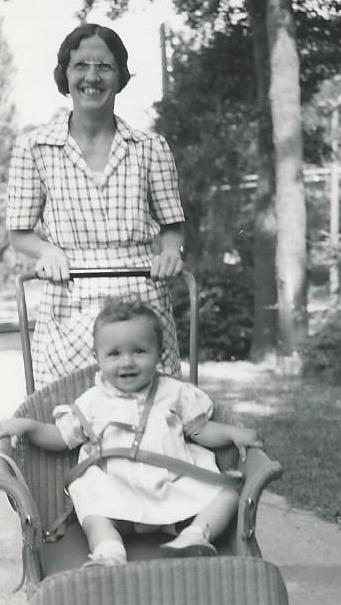
During the first few years of Jean and Cy’s marriage, Jean had the help of Cy’s housekeeper, Emma Sauter, who stayed until 1951 or 1952. After that she had two helpers. One, Mrs. Bell, was my beloved babysitter who, in her spare time, cleaned the house. The other, Mrs. Larson, was a Swedish lady who baked for the family, loading the freezer with coffee cakes, cinnamon buns, pies, and cookies several times a month. And on Mondays, Mrs. Larson washed, dried, and ironed all of the clothes and household linens for our family of six. These were luxuries Jean’s mother had never had. Although Mrs. Larson did the baking, Jean never gave up on cooking—that was the one household chore that she really enjoyed.
With household help, Jean could have become a lady of leisure, but she didn’t. Instead, she became a force to be reckoned with. She was not only smart; she was competent, organized, sensible, friendly, attractive, and a natural leader. While she never worked for pay again, Jean was always busy. Early in their marriage, Jean took over Cy’s office bookkeeping, putting his medical practice on sound financial footing before turning the bookkeeping over to an “office girl” and an accountant who set up a collection system for patients who ran a tab at the doctor’s office. (Medical insurance covering doctor’s office visits was almost unheard of in the 1940s and 1950s.) Once she was satsified that Cy’s office was running smoothly, Jean gave up the routine bookkeeping, but she’d often stop by Cy’s office to pick up “the books” to review. If anything was amiss, the office bookkeeper would surely heard about it. She also handled the family’s finances and investments, freeing Cyril of the burden of paying bills or worrying about money.
She joined the Minnesota Medical Auxiliary, the elementary school’s parent teacher association, and a women’s group at Arlington Hills Methodist Church. She took on leadership roles wherever she volunteered. She made new friends through several clubs including the Monday Literary Club, a group of women in St. Paul who got together for lunch every Monday while their laundry was being done by someone else; the St. Paul Women’s City Club where she lunched and played bridge; P.E.O., a women’s charitable organization (the meaning of the initials is secret—Jean always said it stood for People Eat Onions). She also met a small group of her sorority sisters regularly to shop in downtown Minneapolis (mostly at Daytons) and have lunch.
Jean and Cy had an active social life too. Jean loved to entertain, regularly hosting elegant dinner parties. She could host a formal dinner party for ten or twelve people—often a group of doctors and their wives—without batting an eye (though she did commandeer her daughters and their friends to serve the hors d’oeuvres, clear the table, and wash the dishes to her exacting specifications).

Jean was a person people wanted to be with. She played a terrific hand of bridge, loved being with her friends and family, enjoyed world travel, gardening, movies, theater, and dressing up to go out. Jean was extremely pretty and petite, and had a sense of style and design that showed in her tastefully decorated and well-managed home, in her ambitious, creative, and delicious cooking, and in her beautiful garden—not to mention her perfect hair, understated makeup, and beautiful but understated clothes and jewelry. She was elegant, but not flashy. Her dinner tables were always lovely, with centerpieces of roses from her own garden.
Jean was a fierce defender of her children, her husband, her parents, and her home. She’d willingly take on anyone from teachers and school administrators to county bureaucrats when any Tifft or Goodrich or her home was threatened. She was someone you wanted on your side—because you sure didn’t want to be on the other side.
Jean was also funny in a wickedly unorthodox way. She had a small gap between her front teeth through which she would sometimes squirt tea to entertain her kids and horrify Cyril. She could deliver the punch line of a joke perfectly and with a deadpan face—then wait for the guffaws. She was horribly ticklish and we could always get her to squeal by attacking her bare feet. On rare occasion she derived great joy from doing shocking things. Once she bought live chicks for Easter, and had us kids build a fort out of Lincoln logs (the 1950s equivalent of Legos) in the middle of the dining room table to corral them. To Dad’s horror, they cheeped and pooped on the table throughout Easter dinner within their Lincoln log palisade (which thankfully had a floor of newspaper to protect the elegant linen table cloth). We raised the chicks to young chickenhood in the back hall, after which they went to live on a farm.
Jean’s father had leaned toward socialism as a young man, was a staunch union member, and tended to vote Democratic, so that was Jean’s tendency too as a young woman. But as she grew older, she became a Republican, much to the horror of her children and grandchildren. By the late 1960s she was a staunch Republican—though I don’t think she liked Richard Nixon much. Cy’s family, quite a bit better off financially, and more firmly ensconced in the middle class, tended to be quite conservative politically, but when Cy and Jean were married, she became their “thought leader.” While they both paid attention to current events, politics, and the economy, Jean was the one to decide what they thought about it all. First she convinced Cy to become a Democrat, and later, when she changed her mind, a Republican.
The only issue on which Cy led the way was church membership. Jean was Congregational, and Cy was Methodist. The denomination mattered to Cy, but Jean couldn’t have cared less—so she readily agreed to become Methodist when they were married—as long as he followed her lead when it came to politics. While she was still a Democrat, she’d joke that her deal with Cy was that she’d become a Methodist if he’d become a Democrat.
In 1964, when I was fourteen and my brother and sisters were grown and out of the house, Jean and Cy took their first vacation to Europe. From that point on, foreign travel—particularly to the British Isles and Europe—was one of Jean and Cy’s favorite things to do. On these trips Jean loved to shop. She came back from their first trip to Paris laden with gifts. She brought me two pairs of short kid gloves, one navy blue and the other white, just when gloves were no longer in fashion for dressing up. She also brought me a white satin evening bag with petit point embroidery on it that I used for proms, and even carried at my own wedding.
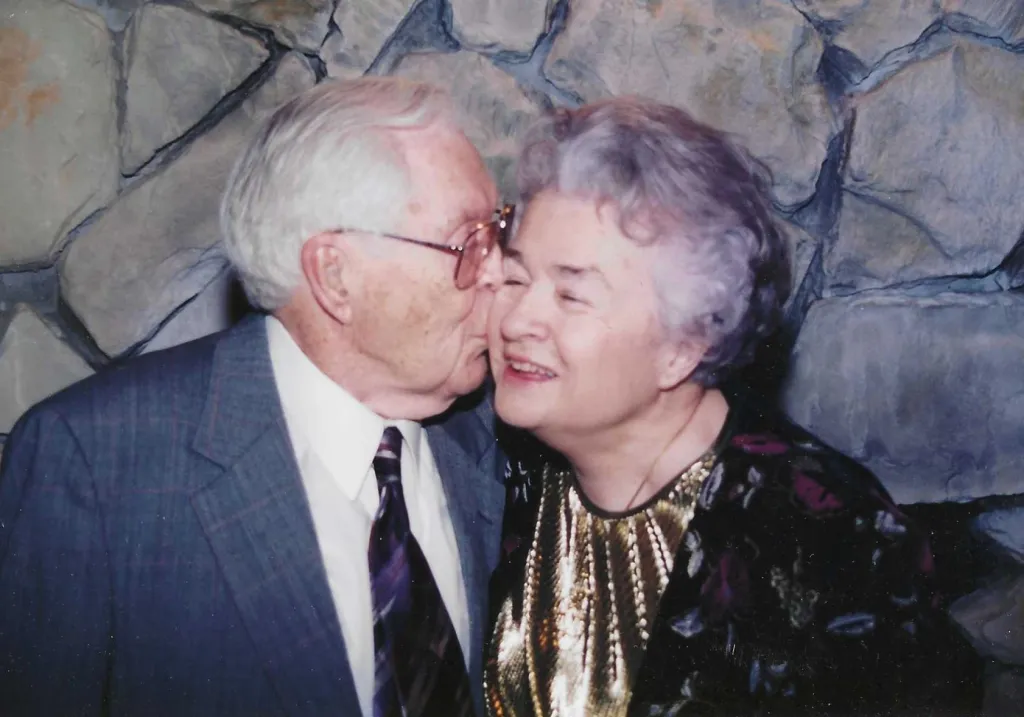
The Tifft family lived at 2195 Arcade Street for forty-seven years, until mid-1986 when Cyril and Jean moved to Lexington Riverside, a condominium apartment complex in Mendota Heights, Minnesota, on the high cliffs above the Minnesota River. There they made many new friends, and enjoyed the amenities offered in the complex, especially the party room (Mom) and the swimming pool and art room (Dad), until well after Cy’s ninetieth birthday, when his physical health began to fail. Cy passed away on April 2, 2002 at the age of ninety-five and one-half.
Cy and Jean were married for almost fifty-five years. They were not, by any stretch of the imagination, a perfect match, and they had their ups and downs, but overall, I think their marriage was happy. I know that both of them were overjoyed to find a second partner with whom they could rebuild their shattered lives. They were clearly devoted to each other.
Living Alone for the First Time

From the time that her eldest grandchild was born in 1962, Mom got great pleasure out of visits with her grandchildren and later, her great-grandchildren. Particularly in her last few years when she was living alone, their visits gave her great joy. She saw all of her grandchildren finish college and graduate school, and launch their careers, and she lived to see seven of her twelve great-grandchildren born. She celebrated her children’s and grandchildren’s academic, musical, and athletic accomplishments with them, and was on hand whenever she could be for their awards ceremonies, graduations, and weddings. Until a few years before her death, she was lively and fun and the grandchildren and great-grandchildren loved being with her. On occasion she provided them with a sympathetic shoulder to cry on.
After Cyril died in 2002, Jean stayed in their apartment for a little more than two years, living alone for the first time in her life. In 2004 she decided to move to Eaglecrest, a senior apartment complex in Roseville, Minnesota, where she would have more companionship, activity, and assistance. She enjoyed her first three years of living at Eaglecrest and made some very good friends.
After her second hip replacement in the summer of 2007, Mom became disheartened by her physical deterioration, and lost her zest for life. She was beginning to lose her eyesight due to macular degeneration, and her hearing was impaired as well. She was finding it increasingly difficult to see well enough to read or hear well enough to enjoy television or conversations with her family and friends. Because of her age and physical impairments, she decided to give up her car, making her dependent on friends and family for transportation. She became quite frustrated with her limitations, and tended to take those frustrations out on her children, and once in a while, even her grandchildren.
In late 2007, she developed excruciating pain in her right shoulder. By late spring, she could no longer hold a book, cut her own food, hold a bridge hand, or support herself on her walker. Despite repeated visits to her doctors, the virulent staph infection that destroyed her right shoulder joint went undiagnosed for nearly six months, until early July, when tests showed that the infection had not only invaded and destroyed her shoulder joint but covered the leads from her pacemaker to her heart. With a raging staph infection, it was dangerous to operate on her shoulder. Her pacemaker could not be replaced without risking the infection getting into her heart. Her doctor told her that the infection was controllable if she stayed on intravenous antibiotics for the rest of her life, but that it was incurable.
Losing her independence, being in constant pain, and knowing that she would never regain the use of her right arm, Mom became despondent and lost her will to live—but she called the shots until the end. After the devastating results of the tests came back and she heard the prognosis for the rest of her life, she instructed me, her health care agent, to enforce her living will, and to allow no heroic steps to be taken to save her life—a painful but necessary role for me to have to play. Her medical team kept her somewhat comfortable on morphine, but she stopped eating and made it clear that she was ready to die.
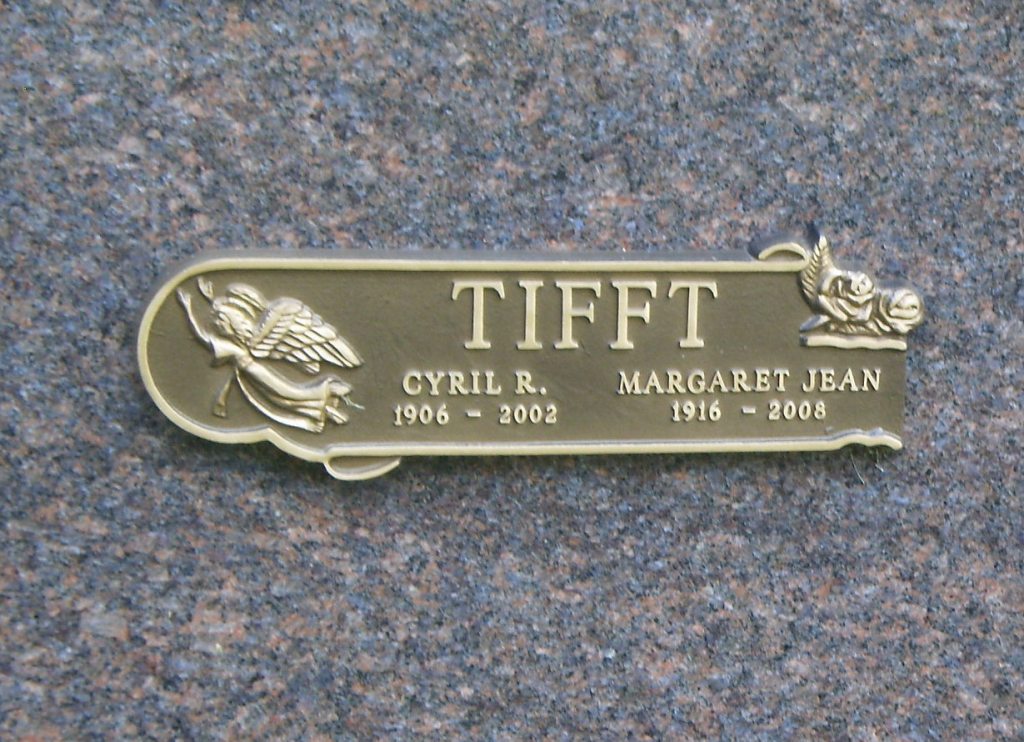
To make Mom more comfortable, we transferred her from the hospital to the Pillars Hospice in Oakdale, Minnesota, where Dad had passed away six years earlier. She lived two more days, passing away on July 18, 2008, just two months short of her ninety-second birthday. Our parents chose to be cremated and their ashes are interred together in a columbarium at Sunset Memorial Park in Minneapolis.
For the most part, Mom was, to me at least, a loving, fun, and supportive mother. But despite her happy childhood and early adulthood, she always had an aura of melancholy about her and she could suddenly erupt in anger, way out of proportion to the cause. Later in life, she tended to judge her children and grandchildren harshly, and let horribly negative comments slip out, many of which still rankle today. Mom rarely showed this side of her personality to outsiders. With them, she was almost always positive, supportive, and kind.
It took me many years to understand that Mom’s melancholy, anger, and harshness probably resulted from unprocessed and unresolved grief. Mom had lived a charmed life until World War II. Her parents loved her, supported her in every way, made sure that she never suffered any deprivation, and provided her with all of the benefits they possibly could. She had a loving family, and was healthy, attractive, smart, popular, and well educated. Then she married her Prince Charming, Bill Watson, and she had it all. But in June 1944, she experienced the worst tragedy she could ever imagine, when her beloved husband of barely three years was killed. Her grief must have been unimaginable; yet she didn’t give into it. Instead, she stiffened that spine her mother had given her, and quickly built a life without Bill. Then she was fortunate enough to find happiness again with Cy. But her anger at what she had lost seemed to be just below the surface; it was always there, just waiting to erupt.
In 1986, I visited Jean and Cy to help them empty our family home before they moved. I was helping Mom clean out some storage chests in the basement. I started digging into one, and realized that it was full of Bill Watson’s memorabilia. I asked her if it was okay for me to go through it and without giving it a thought, she gave me permission. I came across a letter that Bill had written to her while the plane that he died on circled in the mountains of Guizhou, lost in a rainstorm. During the flight, Bill had written a lovely, but very unremarkable letter to his parents, indicating how excited he was to be going back to China. Then the pilot warned Bill to prepare for a crash landing, so he took out a pencil and paper again and wrote another letter—this one to Jean. As I read Bill’s letter to Mom, I started to cry. It was heartbreaking and beautiful. In it, Bill told Jean how much he loved her, and that if she was reading the letter, he had died. Finally, at that late date in our relationship, I asked Mom why she’d never mentioned this letter or talked about how she’d felt when Bill died. She said something like, “If I’d ever let myself talk about it, I was afraid I’d start crying and never be able to stop.” It was then that I began to understand that she had never really dealt with her grief, and that it was probably at the root of her melancholy and simmering anger.
Until her death in 2008, and despite her occasional irrational outbursts of anger, my mother was my rock, my role model, my biggest supporter, and my best friend (with the exception of my wonderful husband Jim, of course). I still miss her after almost sixteen years, and as I write these posts, I wish she could answer the phone, so I could ask her questions and let her know how proud and grateful I am to have been her daughter.
Visit our Ancestry.com family tree here.