

P. Theodore Watson: A Navy Doctor’s Experience at Iwo Jima
P. Theodore Watson — Early Life

P. Theodore Watson, known to his family as “Ted,” was born on April 9, 1918, to Clara French Watson and Percy T. Watson. He was born in Fenchow (Fenyang), Shansi (Shanxi), China where his parents served as missionaries from 1909 until 1934. Clara was a teacher, and Percy was a medical doctor.
Ted was the fourth of five children born to the Watsons in China. Clara, a Latin teacher before moving to China, home-schooled all of her children during their early years. Ted attended high school in Peking (now Beijing). In July 1934, he left China with his family, arriving back in Northfield, Minnesota, the Watson family’s hometown in mid-August. Little did he know that his next trip to the Pacific would be while serving as a naval doctor caring for wounded marines at the battle of Iwo Jima.

Ted followed the Watson family tradition of attending Carleton College in Northfield, where he majored in chemistry. There, he met his future wife, Jeanne Winsor. Ted graduated from Carleton in 1939, when he was barely twenty-one, and Jeanne graduated in 1941. They married in June 1942, and their eldest child, Janet Anne, was born in May 1944.
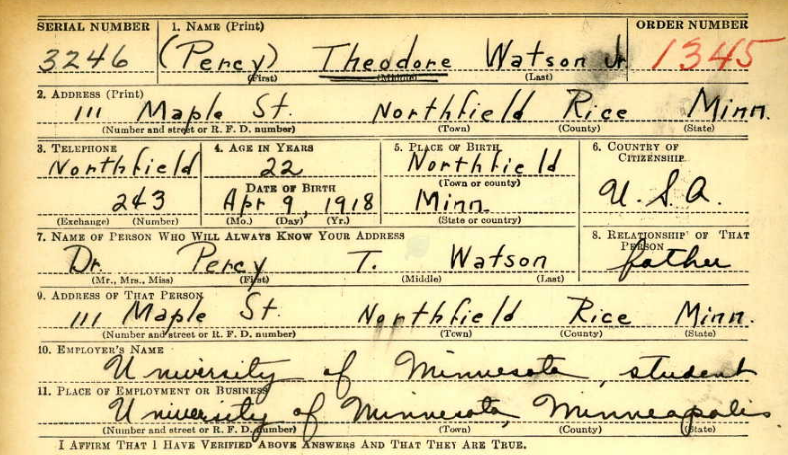
Like his father, Ted became a medical doctor. Immediately after graduating from Carleton, he started medical school at the University of Minnesota. Though Ted registered for the draft at age twenty-two, he didn’t go to war for four more years. Instead, he finished medical school and a residency in obstetrics and gynecology (OB-GYN) in a little over five years. At the young age of twenty-six, he became a fully qualified active-duty Navy doctor.
In the fall of 1944, Ted, Jeanne, and Janet drove to San Diego. There, Ted spent six weeks in training before shipping out to Pearl Harbor.
Ted’s Letter About the Battle of Iwo Jima
Ted’s letter to his sister-in-law is a fascinating tale, full of naval and medical detail. He wrote it on board his ship while it was lumbering across the Pacific just after leaving Iwo Jima. He typed it on a manual typewriter in the days before Wite-Out (a white liquid that became available in the 1960s to correct errors on typed documents) or spell check, only days after treating the worst injuries he had yet encountered in his very new medical career. I have not changed the letter; instead, I’ve annotated it with historical context, photos, and explanatory notes.
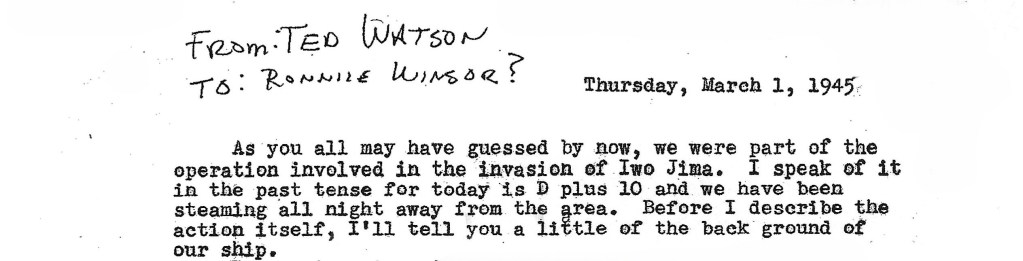
The Ships and Landing Craft Serving the Navy Medical Corps in the Pacific Theater

Ted found the innovations that the Navy was making to improve medical care for battle casualties intriguing. He mentions APAs — auxiliary personnel attack ships — designed to carry fifteen hundred troops, landing craft, and equipment into battle. The Navy converted a few into hospital ships where medical personnel treated wounded troops and transported them to naval hospitals around the world.
Ted served on a smaller LST-H, a ship with a dual mission. It first delivered Marines and amphibious tanks to the battlefield. Because it was designed to carry tanks, it was a slow and heavy ship. LST crews dubbed their ships “Large Slow Targets.” Once the tanks had rolled out of the tank bay, medical personnel rushed to convert it into a field hospital and operating room.
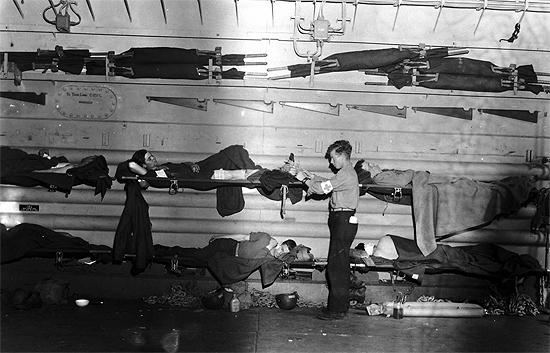
Landing craft — LCVPs, LCMs LVTs, and DUWKs — brought the wounded to the barge moored adjacent to the tank bay for initial sorting and treatment — what we now call triage. Medical corpsmen and sailors then transferred the wounded into the tank bay or arranged for their transport to the better-equipped APA hospital ships. According to Ted’s letter, there were four LST-H at Iwo Jima, each staffed with six doctors and forty medical corpsmen.

At Pearl Harbor Preparing for Battle

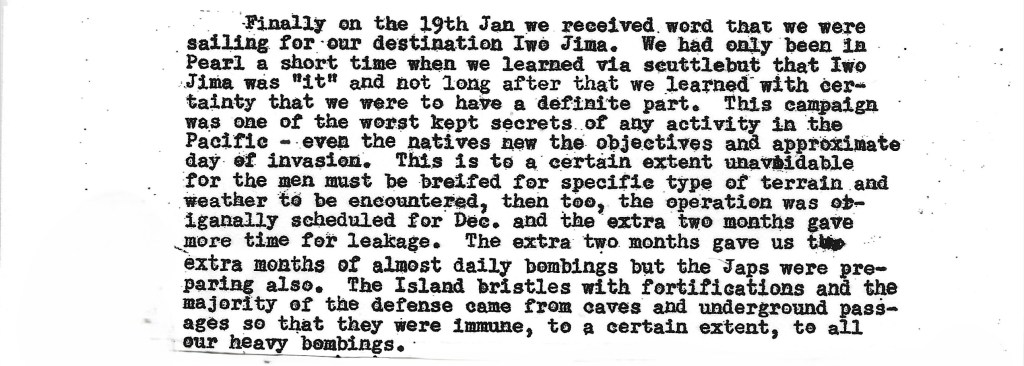
Ted arrived at Pearl Harbor from San Diego on November 21, 1944, and joined his ship, the LST-H 930. The crew spent the next two months getting the ship ready to sail. On January 19, 1945, the fleet commander informed the crew of the fleet’s imminent departure for Iwo Jima — expected to be the definitive battle for control of the Pacific. The “daily bombings” to which Ted refers were U.S. bombings of Japanese positions on Iwo Jima before the U.S. invasion.

Cruising the Pacific
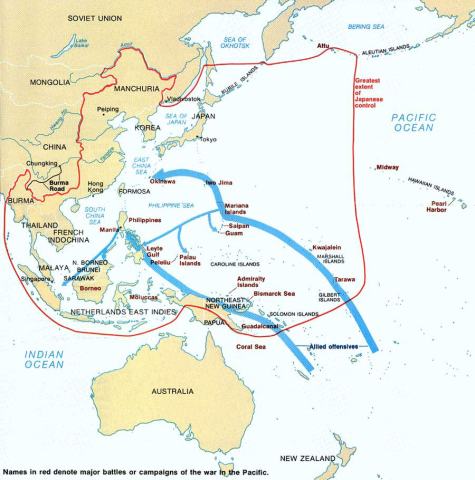
On January 21, 1945, the fleet set sail for the Pacific theater from Pearl Harbor (on the far right edge of this map). Ted only hints at his thoughts as he prepared for the first battle of his war.
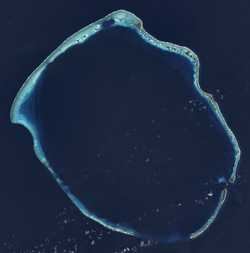
After about ten days at sea, the fleet stopped at Enewetak Atoll in the Marshall Islands (on the heavy blue line in the middle of the map). The U.S. built a naval base there after taking the atoll from the Japanese a year earlier. There, the fleet stocked up on provisions, and the men received unexpected and much-appreciated mail from home.
From Enewetak, the fleet sailed to Saipan, then on to Iwo Jima. In his description of Saipan, Ted mentions that “the Japs had refused to declare the town an open city.” During World War II, military authorities controlling a city could declare it open to avoid an unnecessary battle when enemy forces threatened imminent capture. Authorities declared Paris, Rome, Brussels, Manila, and other cities open during World War II.


The Last Lap Before D-Day at Iwo Jima
It’s hard to imagine the tension: battle-hardened Marines telling green young doctors of their exploits and the horrors of earlier battles; battle briefings; key documents burned in case of capture; and poker played in smoky rooms during the night. Ted slept “surprisingly well.”

D-Day at Iwo Jima — A Long Hard Day
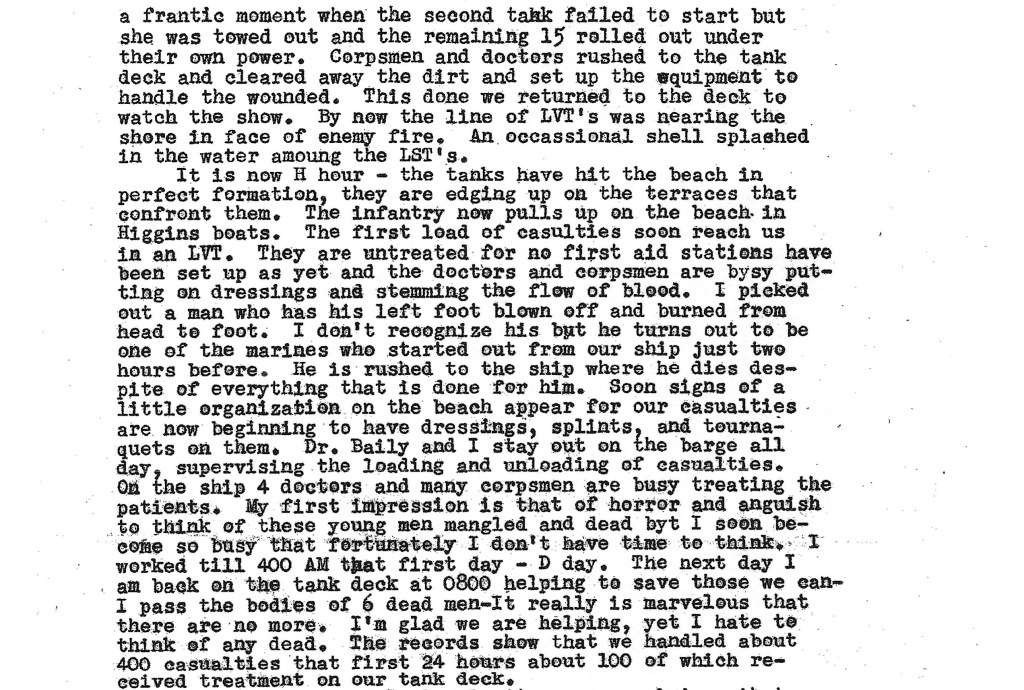
Ted’s ship arrived at Iwo Jima during the night before D-Day — February 19. Ted’s description of his experience on D-Day speaks for itself, but he later told his children about one aspect that is missing here. He described the medical personnel on the barge wearing rubber boots because the deck was awash in bloody water.
On D-Day, Ted worked on the sorting barge from the time the tanks left the ship early in the morning until 4:00 a.m. the next day. Though he undoubtedly saved many lives and prevented many wounds from becoming worse, it was the lost lives and the mangled bodies that he talked about in this letter.

D-Day Plus One
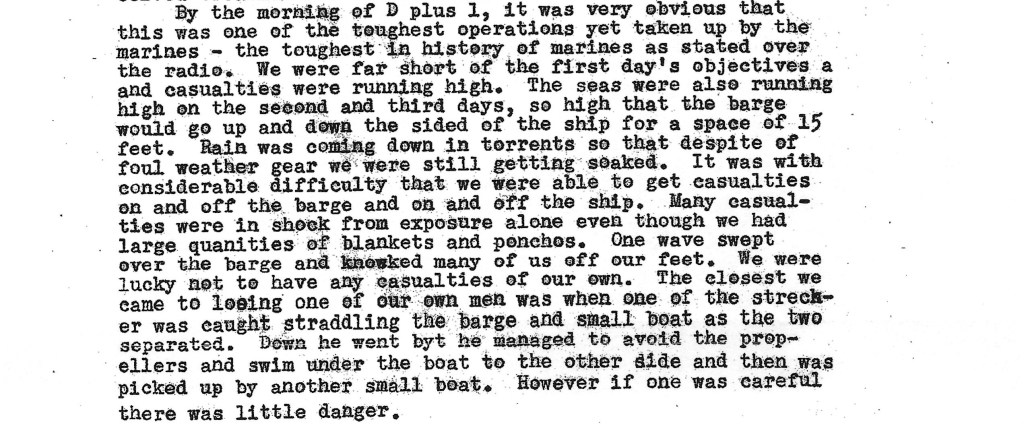
Ted paints a vivid picture of the scene on day two: the ship and barge rolling and pitching in the high seas; the medics and the wounded getting drenched by rain and waves washing over the deck; the barge moving fifteen feet up and down as the crews tried to move the wounded into the tank bay through a side opening; and a man going overboard and swimming under the boat to avoid being chopped to pieces by the propellers. Talk about a baptism in fire!

Mopping Up
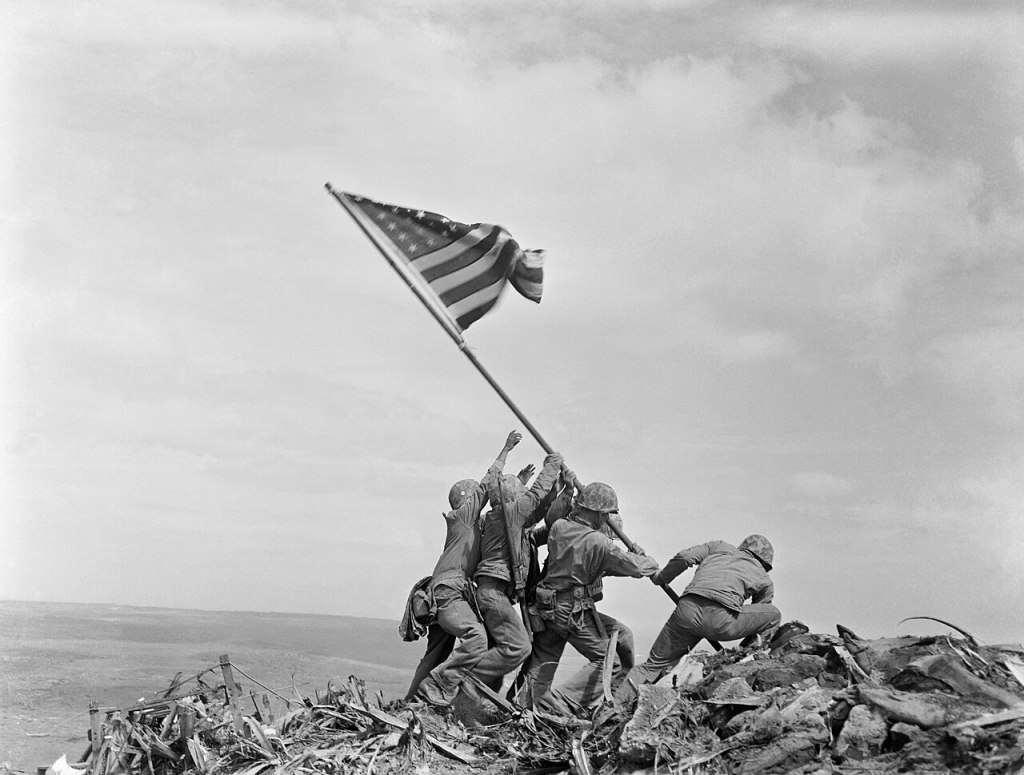
By the fourth day, the onshore situation had stabilized somewhat. That day, the Marines captured Mt. Suribachi, and Joe Rosenthal of the AP Wire Service snapped this iconic but staged, photograph. Medical staff had a chance to sleep and shower on a normal schedule. Though the men aboard the hospital ships were still in danger from continuing enemy attacks, Ted seemed confident that the Navy planes and battleships would keep them safe. Ever the compassionate doctor, Ted worried most about the tragedies that would soon unfold at home when families learned of the death and injury of their sons and brothers. He also recognized that “combat fatigue” was a real issue that would plague some soldiers for the rest of their lives. Surprisingly, psychiatrists were on board to treat the men suffering from what we now call PTSD … and the casualties kept coming.

On the Last Day at Iwo Jima, Ted Makes a Shore Visit
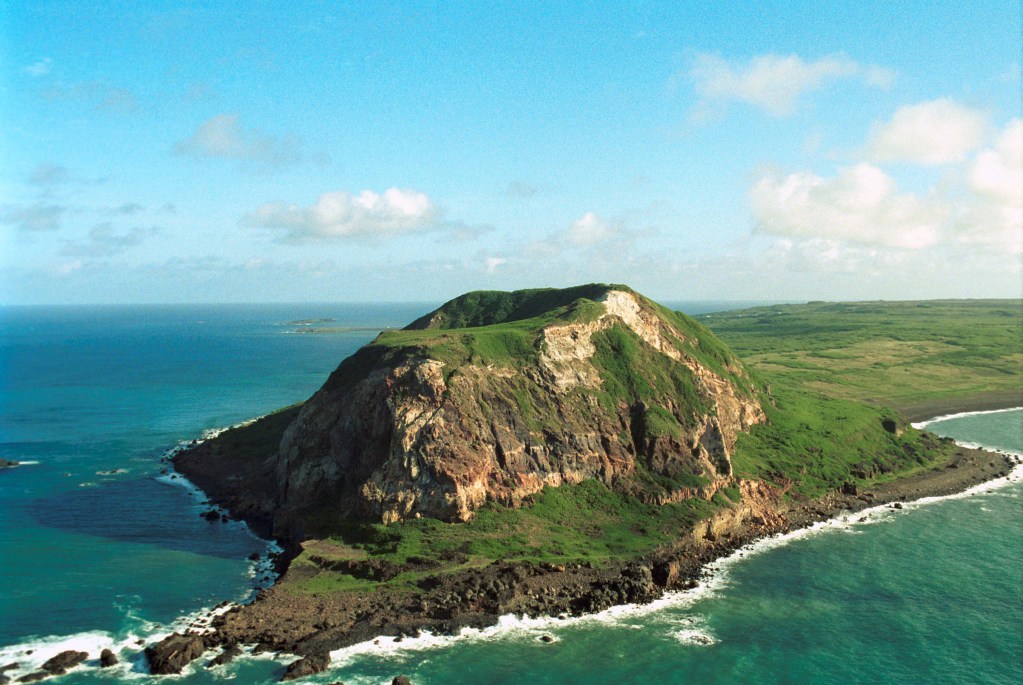
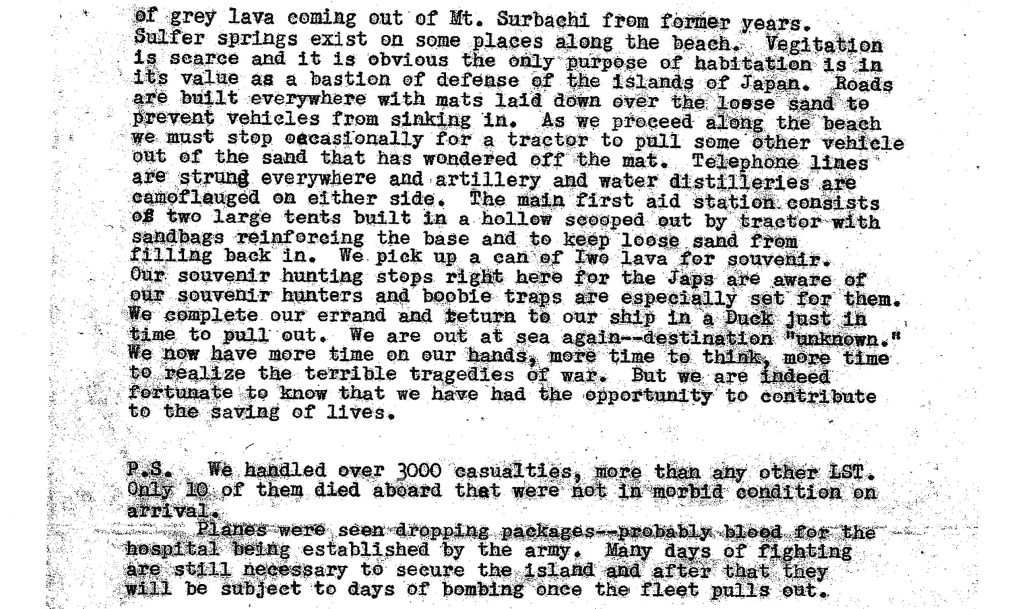
On the ninth day — ‘D plus 8’ — the need for shipboard medics ended. The doctors took medical supplies ashore for the medical stations on the beach and took a look around before heading back to their ship in time for departure.

It turns out that Ted was being somewhat modest in his description of the system for removing casualties from the beach to medical facilities on board ships. He received a personal commendation from the Vice Admiral. According to a report in the Bemidji Daily Pioneer of March 20, 1945:
Dr. Ted Watson, son of Dr. and Mrs. Percy T. Watson of Bemidji [Percy was working in Bemidji at the time] was among a group of doctors who have received the congratulations of Vice Admiral Richard K. Turner for the success of a new plan for handling invasion casualties at Iwo Jima.
Marine Corps combat correspondents report that the doctors used a ‘floating clearing house’ method which speeded evacuation of wounded marines so that some of the men received hospital treatment within thirty minutes after they were hit.
The new link in the Navy’s life-saving chain, hospital control ships lying just off the beach to expedite delivery of wounded men to ships able to care for them, resulted in a sharp reduction in the number of marines listed as missing in action.
Apparently, the medical personnel had used their “two months at Pearl” to good advantage. The Admiral credited Ted and his colleagues with the idea of using barges tied alongside the LST-H ships to triage patients and give them initial medical treatment — an idea that saved many lives.
Ted’s Illustrations of the Ships and Landing Craft Involved in the Medical Operation at Iwo Jima
Though Ted proved to be a lot better doctor than artist, his drawings provide an idea of the watercraft used to provide medical care and evacuation of the wounded.


After the War
Ted and Jeanne Watson

When Ted was discharged from the Navy late in 1945 or early 1946, he went home to St. Paul to his wife and daughter and launched his medical practice. After the war, Ted and Jeanne had three more children: Bruce (1946 – 2009), Craig William (1949 – 2021), and Laurel Jean (1953 – present). Janet passed away in 2023.
During his long career, Ted had privileges at Miller Hospital and St. John’s Hospital in St. Paul. Ted retired in 1980. He delivered over 7,000 babies during his career and was very active in modernizing the practice of obstetrics in the Twin Cities. For instance, when he headed the obstetrics department at Miller Hospital in 1960, he started to encourage fathers to be present at the births of their babies. He also set up several innovative programs, including the hospice program at St. John’s Hospital, and he volunteered at several free clinics. After his retirement, Ted served as the medical director of the Women’s Clinic at the University of Minnesota for four years. Jeanne created a nationally recognized father-infant program to help create a bond between fathers and their babies.
The Watsons and the Tiffts — A Close-Knit Blended Family
Our mother, Margaret Jean (Jean) Goodrich, married Ted’s brother William (Bill) in 1941. In early 1942, Bill, a lawyer in civilian life, became a naval intelligence officer and later served in the Pacific. He was killed in a plane crash in China in June 1944. After Bill’s death, Ted, Jeanne, and Jean remained very close. So, it is not surprising that when Jean married Cyril Tifft — another St. John’s doctor and already Ted’s friend — in 1947, the two families became close. Though Ted and Jeanne were our brother Bill’s biological uncle and aunt, like the rest of the Watson family, they adopted my sisters and me and became our “Uncle Ted and Aunt Jeanne,” too.
The Watsons and Tiffts celebrated many Fourth of July holidays at the Watson’s lake home in suburban St. Paul. We water skied as Uncle Ted patiently hauled us around the lake behind his speedboat, barbequed in their picnic house, and played badminton and croquet with our cousins in their huge yard. Our cousin Craig once told me that it was at one of these Fourth of July barbeques that he learned to love steak, for which he credited our mother. His mother had always tried to pass round steak off as “steak,” so he thought he hated it — that is until our mother brought sliced beef tenderloin for steak sandwiches to one of the barbeques. After tasting Aunt Jean’s steak sandwiches, Craig changed his mind about steak. Ted and Jeanne and our parents remained close friends throughout their lives. The two couples socialized with the same group of doctors, and in later years, they traveled together.
A Note of Gratitude from the Author
My cousin, Craig Watson, passed away unexpectedly in December 2021. In the years before his death, he shared family photos, stories, and his father’s letter about Iwo Jima for a book I was writing about our extended and blended family. Craig was especially eager to see the letter published to reach a wider audience, but he passed away before I could make that happen.
A couple of years after Craig’s passing, I decided to change direction. I realized that a blog would offer more flexibility than a book and would allow the family’s history to reach more people, more quickly. I’m glad this blog now gives me the opportunity to fulfill Craig’s wish by sharing his father’s letter.
Craig’s sister — and my cousin — Laurel Watson Riedel was a tremendous help in putting this post together. She contributed family stories, historical documents, and photographs, which allowed me to annotate the letter and provide important historical context.