
Watson-French Family Overview

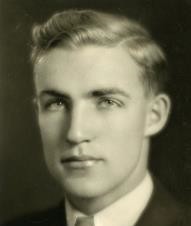
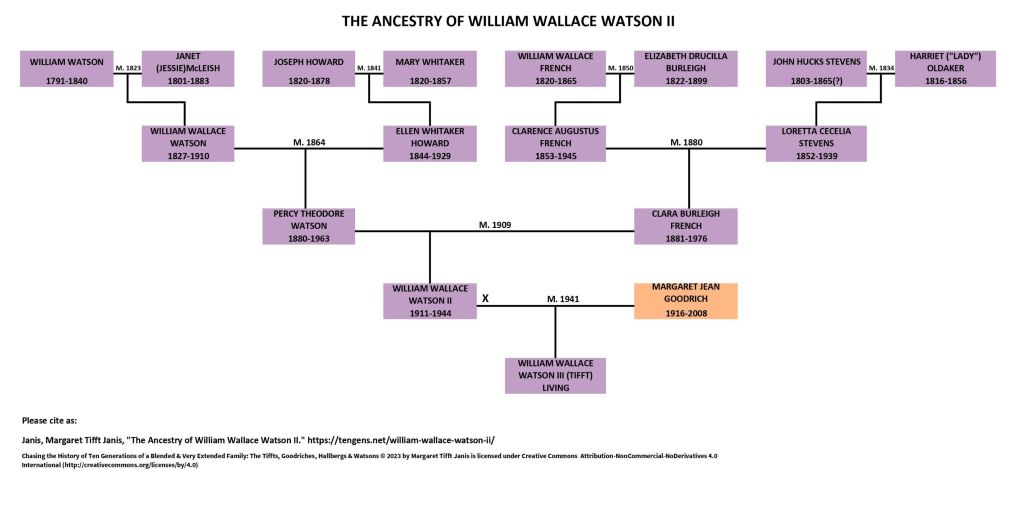
William Wallace Watson II (Bill Watson), Margaret Jean Goodrich’s first husband and father of my half-brother Bill, was born to Percy Theodore Watson (1880–1963) and Clara Burleigh French Watson (1881–1976) in Yutaohe, the summer outpost of his parents’ medical mission in Fenchow (now Fenyang), Shansi (now Shanxi) Province, China, on July 16, 1911. While living in Fenchow, the Watsons had four other children: Edith McLeish the eldest was born in 1909; Ruth Janet in 1913; Percy Theodore in 1918; and Margery Ellen in 1921. While Clara home-schooled all of the children until high school, all of them learned to speak Chinese during their daily interactions with their Chinese peer and elders.
Percy and Clara met when they were students at Carleton College in Northfield, Minnesota. When they graduated from Carleton in 1903, they made a pact with several of their classmates to meet again—in China. They had all agreed to become missionaries for the Congregational Church at the mission supported by Carleton and Oberlin Colleges in Fenchow. Both colleges were affiliated with the Congregational Church at the time.

Percy, a Northfield native, became a medical doctor, and Clara, who was born in Minneapolis but grew up in Monticello, Minnesota, became a teacher. They married on January 1, 1909, and by March were on their way to China. During their twenty-five year stay in Fenchow, Percy became an expert in fighting the frequent outbreaks of the plague. He also built a hospital which has since become a major regional medical center, and a road that linked Fenchow to the provincial capital Taiyuan and the international banking center of Pingyao. Clara Watson raised funds internationally to support Percy’s medical work and the hospital, and helped establish schools and adult education programs in Fenchow.
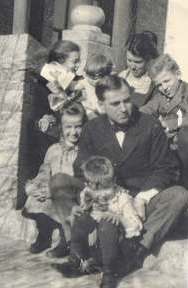
Bill Watson (1911-1944) attended high school in Northfield, then graduated from Carleton College in 1933, and Harvard Law School in 1936. After law school, Bill had a short career at a Minneapolis law firm, and then became an assistant attorney general for the state of Minnesota. He married Margaret Jean Goodrich (always known as Jean) in May 1941, and in early 1942, shortly after Pearl Harbor, he volunteered to join the U.S. Navy as a reserve officer. He was first sent to Chicago for training at the Great Lakes Naval Training Station. In 1943 he was sent to India, and in May of 1944, he was able to take leave to come home to Minnesota to visit his wife and his new son, William Wallace Watson III. As soon as he returned to India, he was reposted as the Naval Attaché to the U.S. Embassy in Chungking (now Chongqing), the capital of “Free China” during it’s war with Japan. En route, his plane crashed in the mountains of southern China, and Bill, the only passenger on board, was killed. He was almost thirty-three.
I want to thank my brother Bill especially, for helping me research Bill Watson’s life, and the plane crash that killed him, as well as my sisters, Mary and Liz, for providing memories, stories, and photos of the Watson family, and my Watson cousins, Greta and Laurel, and the late Janet Watson O’Neil and Craig Watson, for providing stories, photos, letters, documents, and insights into the Watson family.
For more information, visit our Ancestry.com family tree here.
Now let us meet Bill Watson’s ancestors.
Sections
The Watson-McLeish Family
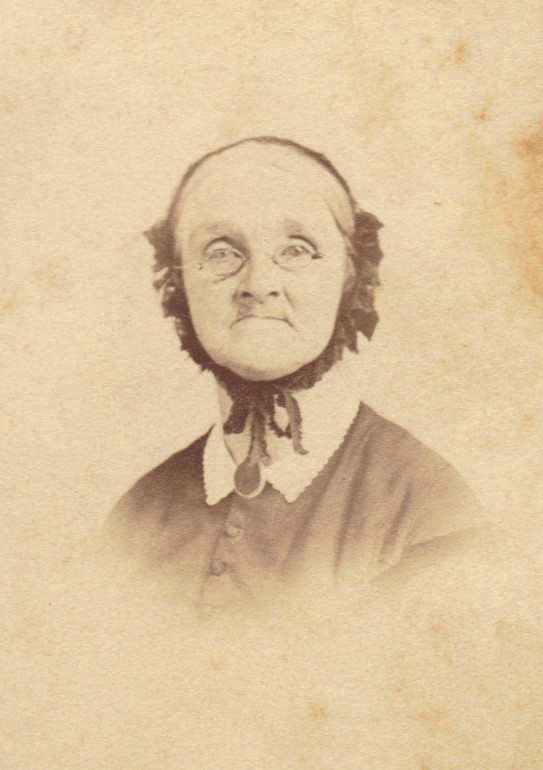
Bill Watson’s paternal great-grandparents were William Watson (1791-1840) and Janet McLeish (Jessie, 1801-1883) who were originally from Dundee, Scotland. In Scotland, William was a flax dresser in the linen weaving industry. He and Jessie had nine children, five girls and four boys, while living in Dundee. All of the girls, including triplets who lived, surprisingly, well beyond infancy, died in Dundee, the last passing away shortly before the family emigrated. William and Jessie Watson came to the United States in 1838 from Scotland with their four surviving children, their sons Robert (1825-1913), William (1827-1910), David (1829-1839), and John (1834-1924). The Watson family first settled in Parma, Ohio, near Cleveland. They were drawn to Parma by one of Jessie’s brothers who had already settled there. Both David and his father, William, died of tuberculosis in Parma within about two years of their arrival, leaving Jessie to raise three boys on her own. She managed to educate all three with the help of her brother.
The two eldest brothers, Robert and William Watson (Percy Watson’s father and Bill Watson’s grandfather), left Ohio and struck out for Minnesota territory in 1850 when Robert was about twenty-five and William was about twenty-three, leaving their mother and John, their younger brother, in Ohio. They traveled by river steamer from Galena, Illinois, up the Mississippi River to St. Paul, passing Indian villages on both sides of the river along the way. Though Minnesota had become a territory the previous year, the settlement at St. Paul was populated by a rough crowd: lumbermen, fur traders, Indian agents, French-Canadian voyageurs, military men, and fortune seekers. By contrast, the Watson brothers, a well-educated and civic minded pair, sought farmland, not adventure. When they first arrived, they walked all over the area that was to become Minneapolis and St. Paul, looking for land to settle on. They found it near Cottage Grove, Minnesota, southeast of St. Paul between the Mississippi and the St. Croix rivers. After harvesting their first crop in the fall of 1850, Robert left William to manage their farm, and went back to Ohio to bring his mother and brother to Minnesota. Once they were all settled in Cottage Grove, Robert and William built a home that is still standing today, and is part of the historic district of Cottage Grove. Eventually, as the Watson men married and started their own families the three brothers developed individual farms, built homes, acquired more land, and became well-respected and prosperous members of the thriving Cottage Grove community.
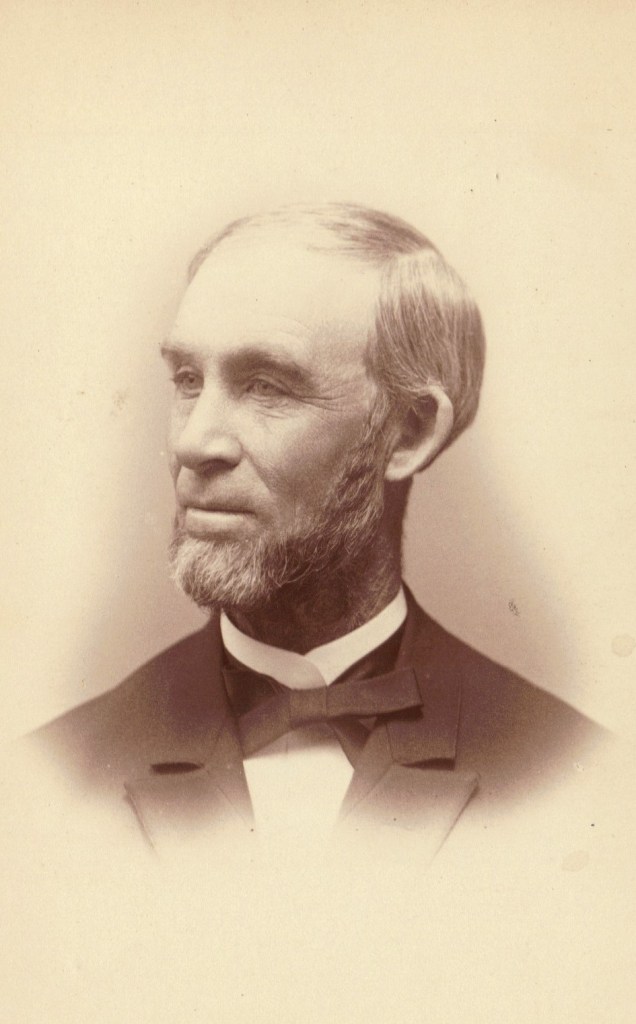
Despite their obvious attachment to Cottage Grove, in the late 1870s Robert and William moved their families further south to Northfield, Minnesota, leaving their brother John and his growing family in Cottage Grove. Robert and William chose to move to Northfield to give their children better educational opportunities at the newly established Carleton College. Carleton, the fourth oldest private college in Minnesota and affiliated at the time with the Congregational Church, had opened its doors to students, both male and female—unusual at the time—in Northfield in the fall of 1867.
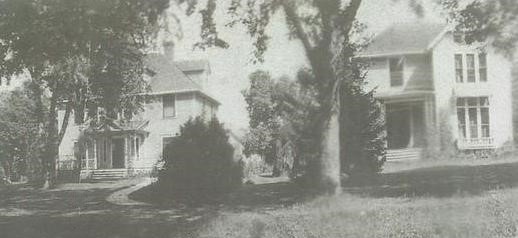
Robert and William were apparently very liberal-minded when it came to educating their daughters. Many Watsons— both sons and daughters—and their descendants have attended Carleton through the years, and many of the women, just like the men, have had impressive careers. Robert’s daughter, and Percy’s first cousin, Isabella Watson, was a French professor and Dean of Women at Carleton at the turn of the century when Clara was a student.
The Howard Family

Percy Watson’s parents, William Wallace Watson (the first) and Ellen Whitaker Howard (1844-1916), were married in 1864, in Cottage Grove, Minnesota. Ellen was born in 1844 in Manchester, England to Joseph (1820–1878) and Mary Whitaker Howard (1820–1857). In 1851, according to the British census the family was living in Mottram in Longdendale, Chesire where Joseph was an “overlooker of power looms.” In other words he was a supervisor in a cloth weaving operation. Living with Joseph and Mary Howard were his parents, John and Mary Moss Howard and three children, Ellen, age seven, and John and Jane, both age three, possibly twins. Another daughter Sarah (Howard Seamer), may have been born before Mary Howard died in 1857. After Mary’s death, Ellen’s father Joseph Howard brought his motherless family to the United States and settled in Cottage Grove in about 1857. Ellen was just twenty when she married William Watson. He was seventeen years her senior. William and Ellen Howard Watson had nine children, six of whom, including—again—triplet girls, died when they were young children. Three of their children, including Bill’s father, Percy, lived into their eighties.
The French-Burleigh Family
Bill’s maternal grandfather, Clarence Augustus French (1853-1945), was descended from two early New England families. Until 1630, immigration from England to New England had been slow. Then in 1630, John Winthrop led a fleet of eleven ships, carrying roughly one thousand people to the New World. About one hundred went back to England shortly after their arrival, and another two hundred died of disease. After trying several places to settle, the remaining seven hundred brave souls decided to settle on the Shawmut Peninsula, at what would ultimately become Boston. That was the beginning of the Massachusetts Bay Colony. Among those seven hundred souls were nine members of the French family of Assington, Suffolk England. They were Thomas French, his wife Susan, and seven children—Clarence French’s paternal ancestors. Throughout the 1630s, something like twenty thousand people immigrated to New England in the “Great Migration” leading to a population explosion in the next few generations. Clarence French’s mother’s family, the Burleighs, had settled in Ipswich, Massachusetts, by 1648—a bit later than the French family, but still very early in the history of the settlement of New England. Future posts will explore these two families in greater detail.
William French (1820-1865), Clarence French’s father, was a clipper ship captain. During his lifetime he was considered to be moderately wealthy. His wife, Elizabeth Drucilla Burleigh French (1822-1899) was apparently indomitable, sailing with her husband on multiple voyages, even though a woman sailing with an all-male crew was considered bad luck in those days. Elizabeth, even gave birth to three of their four children on board William’s ship. Clarence’s brother, William Franklin French, was born in 1852, while his parents were sailing the South China Sea. Clarence, the second child, was born in 1853 on the ship while it was anchored in the harbor in Portsmouth, England. His younger brother, Charles Holmes French, was born at sea near Capetown, South Africa in1857. Clarence’s only sister, and the youngest of the French children, Clara Burleigh French, was born in 1854, at home in Exeter, New Hampshire. Both William and Clara died during childhood. In 1865, when Clarence was about twelve, his father Captain William French was killed by a mutinous crew off the coast of Brazil. At the time of the fatal mutiny, his wife and children were not on board to bring luck—good or bad. William and Elizabeth French’s lives and adventures will be further discussed in future posts.

In 1868, when he was about sixteen, Clarence left his home in New Hampshire and traveled west until he landed in Minnesota. Once he was settled in the Twin Cities of Minneapolis and St. Paul, he learned the printing trade, finished his education at night school, and became a newspaperman. In 1879, he and two partners started one of Minneapolis’ first newspapers, the Evening Journal. Over the years it merged with several other papers, and eventually they all became the Minneapolis Star Tribune, still the premier newspaper in Minneapolis. In 1885 Clarence bought the Monticello Times and became its editor. He owned and operated the paper for sixty years until his death in 1945.
The Stevens-Oldaker Family
Clara Burleigh French’s mother, Loretta Cecelia Stevens (Cecelia or Celia, 1852- 1939), was descended from two English families, but unlike Clara’s father’s ancestors who were early colonists, her mother’s parents did not arrive in the United States until about 1836. This fascinating family will be discussed extensively in future posts.
Her father, John Hucks Stevens (1806-1862), was born in 1806 in Harwich, Essex, England. He was a chemist, a brilliant inventor, and an irresponsible philanderer. After he, his wife Harriet, and their first son settled in Brooklyn in 1836, John worked as a chemist (pharmacist) and pursued his inventions, the most notable of which was the safety match, for which he received several patents. Unfortunately for his family, he lost his patents through some complicated legal shenanigans, and never successfully supported his ever-expanding family again.
Cecelia’s mother, Harriet Oldaker (1816-1856), was born in Shoreditch (later incorporated into London), Middlesex, England in 1816. Her parents were Bernard Oldaker (1788-?) and Nancy Warters (possibly Waters, no dates). Bernard Oldaker was a cabinetmaker with a wanderlust. His first cabinet workshop was in Shoreditch. At the time, furniture-making was one of the major industries in Shoreditch. In Shoreditch, the Oldakers had their first five children, after which they moved to Paris, where Bernard set up shop, and Nancy had at least four more children. The family then moved to Brussels, and finally to Rotterdam, the Netherlands. Nancy died in the Netherlands, after which several of the Oldaker children immigrated to New York, as did Bernard.
Harriet Oldaker and John Hucks Stevens were married at the British embassy in the Hague in 1834 while Harriet was living with her family in The Netherlands. After their marriage, they went back to England for a short time, then emigrated to the United States in 1836. When Harriet and John arrived in New York, they settled in Brooklyn. Harriet bore at least eleven children over the course of her eighteen year marriage, the first in England and the rest in the United States. John’s greatest success seems to have been in fathering children. The family lived in near-destitution while John pursued his inventions and his legal case against the men who he believed had stolen his patents. Harriet died of “phthisis” (tuberculosis) in 1856 at the age of forty when Clara French’s mother Cecelia was less than four. Shortly after Harriet’s death, her husband abandoned his children and ran off with another woman. In the ensuing years, he would occasionally visit one or another of his children, but apparently provided no support.
Born in 1852, Cecelia (Clara’s mother and Bill Watson’s grandmother) was one of the youngest of John and Harriet Stevens’ many children. After her father abandoned his family, Cecelia was taken in by one of her older sisters and raised in Washington, D.C. She came to Minneapolis in the late 1870s at the behest of her brother, Charles, who had started the Evening Journal newspaper with Clarence French. Clarence and Cecelia married in July 1880, when they were both about 28. Apparently this semi-arranged marriage worked out. Clarence and Cecelia were married for 58 years, until Cecelia’s death in 1939.
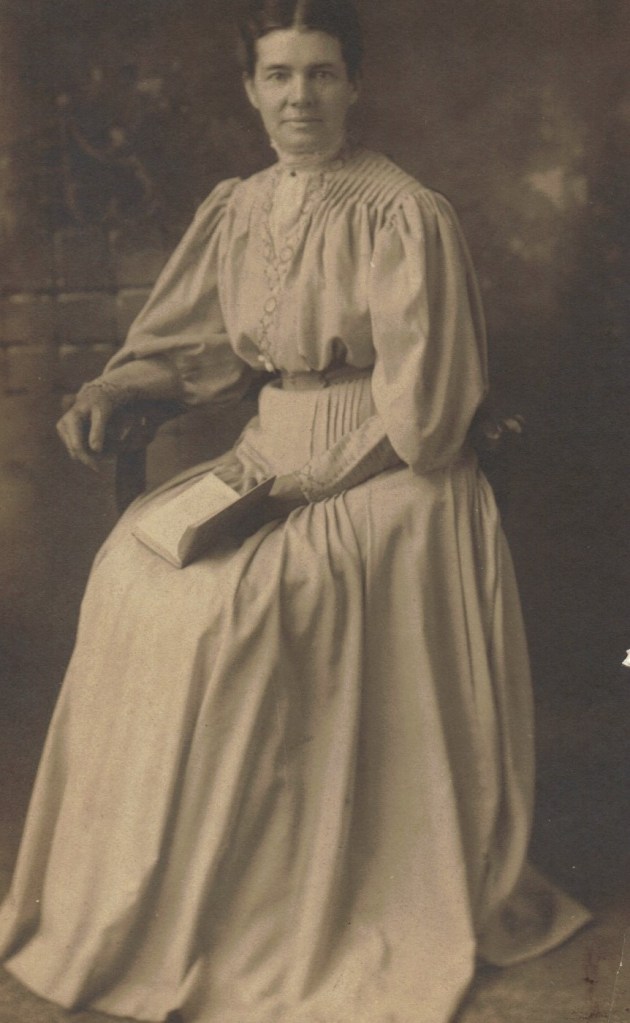
Clara, the first of Clarence and Cecelia’s four children, was born in Minneapolis in July 1882, about a year after her parents’ marriage. She was named after her father’s younger sister who had died as a toddler. Clara’s sister Edith was about a year younger than Clara. Clara and Edith had two brothers who died at very young ages. Following in her father’s footsteps, Edith became a newspaper woman. Sadly, she died from childbed fever in March 1909 a few days after her daughter, Dorothy, was born. Clara and Percy were already on their way to China when Edith passed away, but named their first child after her. Cecelia and Clarence French raised their motherless granddaughter who continued to live with her grandparents into adulthood, taking care of them until Cecelia died in 1939, and Clarence died in 1945.
Visit our Ancestry.com family tree here.