
From Meningioma to Tengens: My Journey of Recovery
The Seizure

After a morning of meetings in early 2010, I was working at my computer when I suddenly found myself sprawled on the window seat in our bedroom. Throw pillows were scattered across the floor. My tongue looked like hamburger where I had chewed it. I had no memory of how I got there. I didn’t know it then, but I had just had a seizure due to a meningioma — a brain tumor.
That seizure would change the course of my life.
Warning Signs: Headaches and Memory Loss
In the summer of 2009, I started to experience blinding headaches. They lasted only seconds, but they could knock me flat if I didn’t grab onto something. Soon, other symptoms appeared. I began losing my memory and vocabulary, and experiencing short mental lapses. Strange physical problems followed — large black floaters in my eyes, a twitch in my left eye, and others.
I saw several doctors. None performed a thorough work-up, but each had an explanation: my age, stress from my hard-driving Type-A personality, or a medication I was taking. The only specific advice I got was simple — stop working.
But I was sixty years old and nowhere near my expiration date. I rejected retirement; instead, I continued working while hiding my symptoms.
The day after my seizure, I saw my primary doctor again. This time, he took me seriously and ordered tests.
Diagnosis Meningioma!
Ten days later, I had a diagnosis: a meningioma — the most common type of brain tumor. Though not cancerous, it was anything but benign. Severe swelling on both sides of my brain had caused the blinding headaches, the memory loss, the physical symptoms — and finally the seizure.
Never in a million years did I expect to be brought down by a brain tumor.
The meningioma needed to come out immediately.
Surgery
Within days of the diagnosis, a neurosurgeon successfully removed the meningioma in a grueling four-hour operation. When I woke the next morning in the ICU, all of my physical symptoms were miraculously gone — including a low-grade headache I had not realized I had had for much of my adult life. I suffered no lasting physical damage.
I left the hospital after three nights with two impressive black eyes, titanium clips in my skull, and twenty-eight stitches from forehead to ear. Within a month, all of those outward signs of brain surgery were gone.
I was lucky, and I knew it.
Lasting Cognitive Damage
At first, I was euphoric. I had survived brain surgery! My meningioma was a thing of the past — or so I thought.
Almost immediately, I developed severe insomnia. I needed sleep to recover, yet I could manage only three or four hours a night. I woke at 2:00 a.m., ravenously hungry and worrying obsessively about problems without solutions.
My personality changed. I became depressed, anxious, angry, frightened, and bored. Once an extrovert, I now avoided friends, yet felt intensely lonely. Parties overwhelmed me. My mood swings drove my husband crazy; I was angry if he was overprotective and angry if he wasn’t attentive enough. Once, I cried inconsolably for hours over a novel featuring a dog that had died of cancer.
Then I began to understand the deeper loss: much of my cognitive ability was gone. My meningioma, though gone, had left me with severe brain injury.
It was as if the most organized person in my family had suddenly developed ADHD. I could no longer plan, concentrate, remember, or organize. Even my sense of direction vanished.
Evidence of my cognitive deficits was everywhere. I stopped speaking mid-sentence because I could not remember what I was saying. I forgot which way to turn to reach the grocery store I had driven to hundreds of times. The familiar accounting software I’d used for years flummoxed me. Over and over, I couldn’t find the send button on my computer screen. I left key ingredients out of familiar recipes.
Worst of all, I knew exactly what I had lost.
Searching for Answers
By the summer of 2010, I realized I wasn’t coping well with my brain injury. Though I had healed physically, my mental recovery had stalled.
Believing that insomnia lay at the root of my cognitive problems, I saw a sleep specialist. He prescribed sleeping pills, but the results were disastrous. Several kept me awake for days. Another caused such intense dreams that I could not wake from them.
Sixteen years later, I still remember those dreams. The most vivid came after I watched the televised vote for the Affordable Care Act in the U.S. House of Representatives. That night, I dreamed I was on the House floor whipping votes and later celebrating at the Democratic victory party. I knew it was a dream, but I couldn’t wake up. Now it sounds trivial; at the time, it was terrifying.
None of my post-op problems interested the neurosurgeon. The meningioma was gone — what more did I want? But finally, about six months after my surgery, he referred me to a psychologist who specialized in treating the after-effects of brain injury.
The psychologist identified my obsessive nighttime worrying as rumination. Normally considered a cause of anxiety, in my case, rumination was the result of anxiety about my lasting cognitive losses. First, he referred me to a physician to prescribe anxiety medication. Then he referred me to an endocrinologist, who treated the blood sugar swings that made me ravenously hungry in the middle of the night. Testing showed that I had become hypoglycemic as well as mildly diabetic. Finally, he sent me for neuropsychological testing.
Those results confirmed what I already knew: the deficits caused by the meningioma were real and significant.
The Cure
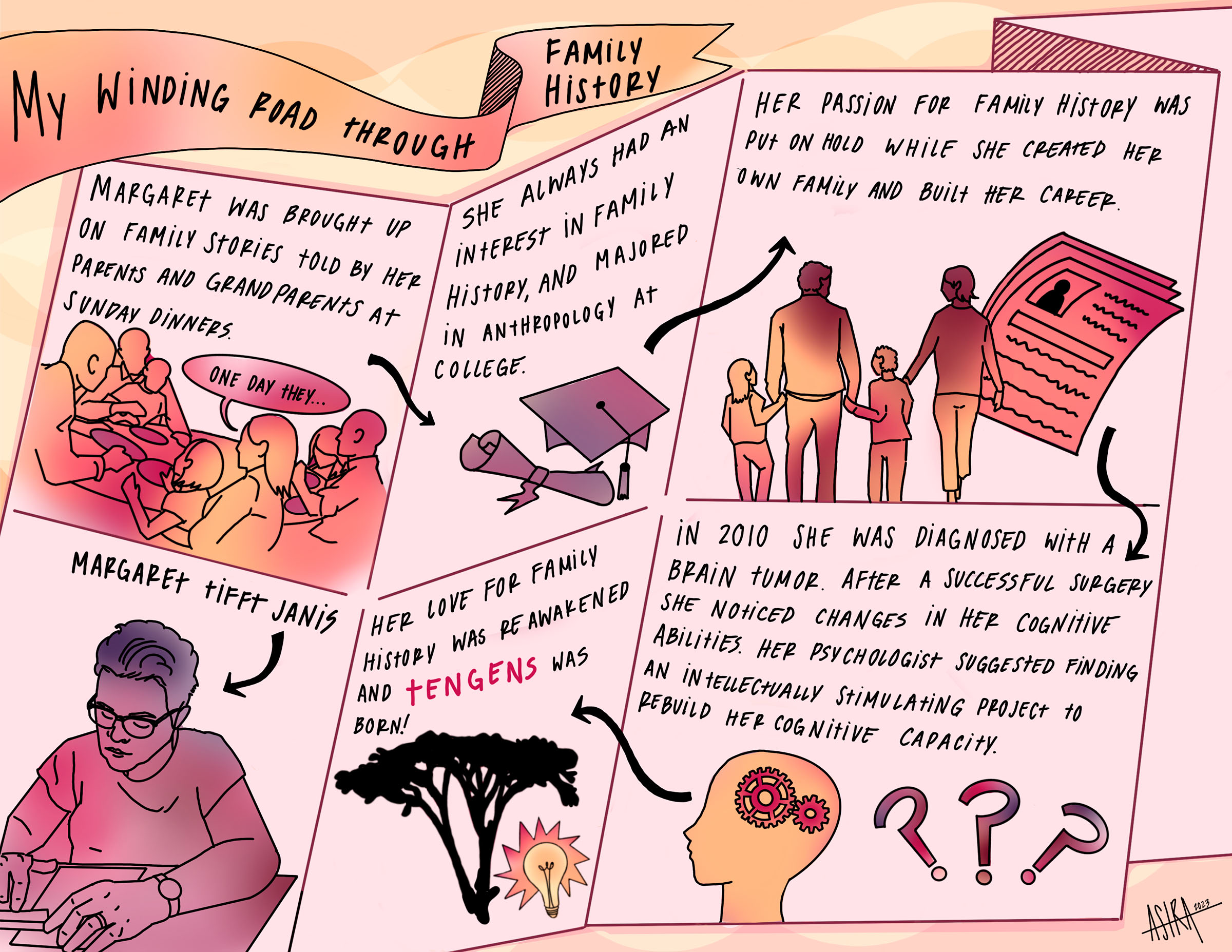
After about a year of treatment, my psychologist told me I had a narrow window — about three years — to reverse the cognitive damage I’d suffered due to my meningioma. During that time, I needed to harness my brain’s neuroplasticity to rebuild what I had lost.
Unfortunately, when I began looking for help, no therapy existed — at least not in Santa Fe, where I lived. Instead, my psychologist advised me to rebuild in whatever ways I could by regaining my computer skills and challenging my mind with word and number games.
Ironically, today the internet is full of brain-training programs that might have helped me then. I have tried many of them since, and have become happily addicted to Wordle, Sudoku, and jigsaw puzzles.
But my psychologist knew games alone would not be enough. What I needed most was meaningful work — something intellectually demanding that I could pursue at my own pace. Without it, he warned, I might be stuck exactly where I was eighteen months after surgery.
During our sessions, I had shared stories about my parents’ and grandparents’ past, many of which I had heard at the Sunday dinner table as a child. I expressed regret that I’d never had time to turn them into a written family history. Recognizing how deeply the family stories affected me, he suggested I finally take the time to do it.
Ultimately his suggestion grew into the website Tengens: The Tifft, Goodrich, Hallberg, and Watson Families.
It turns out that the stories I had listened to as a child had never really left me. In the end, they helped lead me back to myself.
By recording my family’s past, I rebuilt my own future.