

The Hallberg-Jonsdotter Family Overview
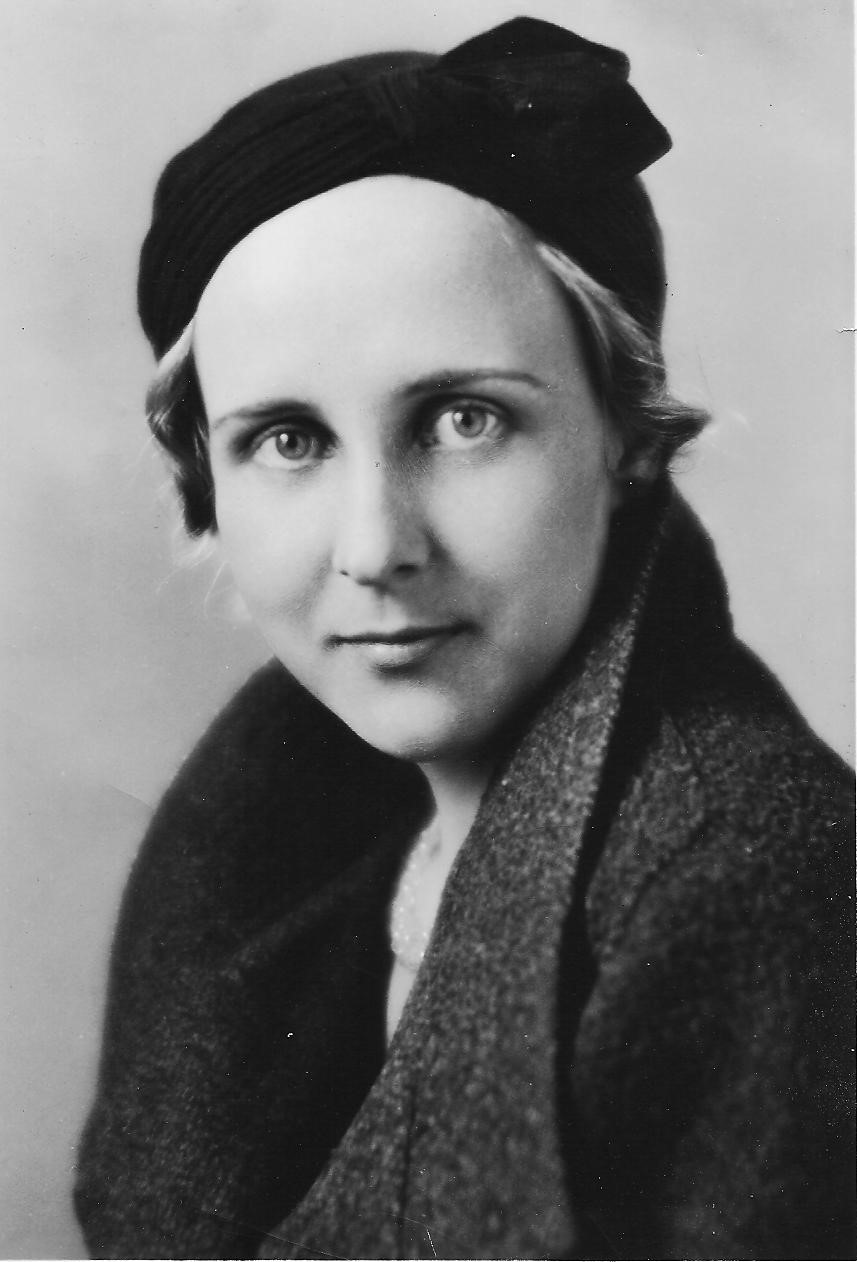
Beatrice Anna Matilda Hallberg was Cyril Richardson Tifft’s first wife and the mother of Elizabeth Ann Tifft and Beatrice Mary Tifft. She was born in Minneapolis, Minnesota, on January 8, 1908, to Carl Hjalmer Hallberg (1882–1961) and Anna Elisabet Jonsdotter/Johnson (1881–1959), both of whom were Swedish immigrants. Beatrice graduated from North High School in Minneapolis in 1925, and from the University of Minnesota in 1929. She married Cyril four years later. They lived in St. Paul, Minnesota, where Cyril had also his medical practice. Tragically, Beatrice died of an undiagnosed heart condition in February 1946 at the age of thirty-eight.
Carl and Anna grew up in the small village of Utterbyn, in Fryksände Parish in the county of Värmland, in western Sweden near Torsby, where the only church in the area—Lutheran, of course—was located. Carl and Anna attended the same one-room school in Utterbyn through the sixth grade, as required by Swedish law at the time. By the time they were teenagers they were sweethearts.
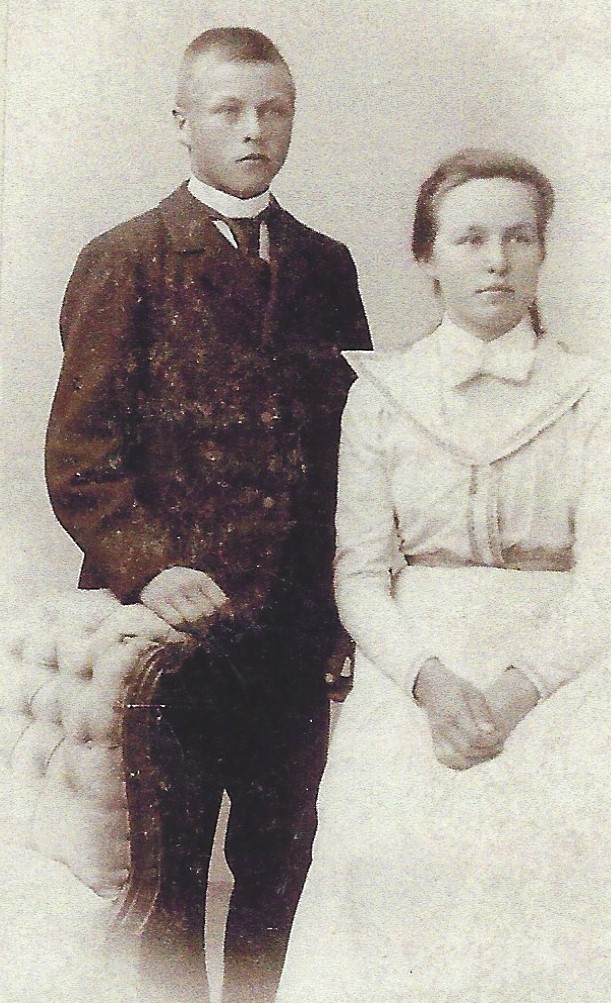
Although it was the Swedish custom for the eldest son to inherit the family house and land when the parents died, Carl Hjalmer, the only Hallberg son, had other ideas for his future. At the age of twenty, Carl set off for a better life and more opportunity in America. According to the Fryksände Parish church records in Torsby, Carl left his home on November 21, 1902.
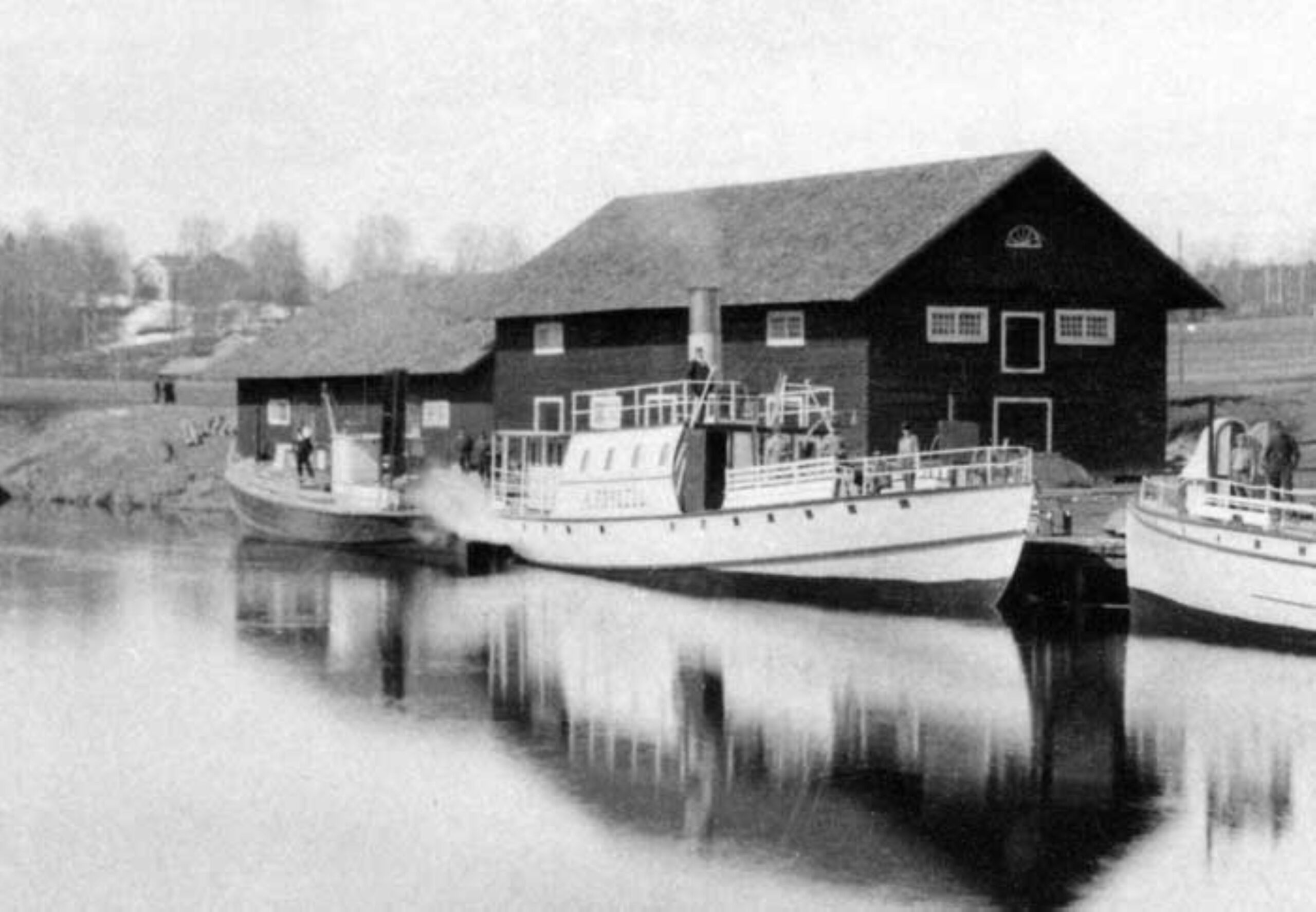
A Swedish historian/writer, Hans Hogman, writes that an emigrant’s journey usually took between sixteen and twenty-four days from the 1880s to the early 1900s. Although Gothenburg was a major port for Swedish emigrants, most western Värmland emigrants from Utterbyn and Torsby traveled first by a water taxi from Torsby down the River Fryken to Port Fryksta in Kil, then by train to Oslo, Norway which was only 128 miles compared to 141 miles to Gothenburg. From the port in Oslo, Swedish emigrants boarded a ship to the east coast of England, then took a train to Liverpool, the major port for emigrant travelers.
In Liverpool, emigrants boarded an ocean liner for New York where they finally arrived at Ellis Island. After the immigrant health examination and other processing—taking several hours if all went well—Carl would have boarded a ferry taking him to New Jersey where he would begin his train journey to Minneapolis, likely another several days. When he finally arrived at his destination he had precious little in his pocket and knew very little English. In Minneapolis Carl quickly found employment with a private shoe repair business. Carl’s father had for a time been a shoemaker, so it may be that Carl had learned the trade from him. Within ten years he became the shop foreman–a good job that allowed him to provide well for his wife and two daughters. Later he was a shoe repairman at the Minneapolis Powers Department Store, where he was employed for the rest of his career.
Anna followed Carl to America—probably by approximately the same route—leaving Utterbyn on June 12, 1903 just four days after she turned twenty-two. Before she married Carl on January 2, 1905, Anna worked in a North Minneapolis hotel, most likely as a housekeeper. After her marriage, she had the luxury of being a full-time homemaker. Carl and Anna’s first child Mabel Elsa (always called Elsa) was born later in 1905 and little Beatrice was born prematurely, two and one-half years later.
Many Swedish people had already settled in America by the time Carl and Anna left home in the early 1900s, but many, like Anna and Carl, continued to immigrate to the United States well into the twentieth century, looking for a better life and more economic opportunity.
Minnesota itself was a magnet for Swedish immigrants. Of the 1.25 million Swedish immigrants who came to the United States from 1850 to 1930, nearly 300,000 Swedes settled in Minnesota—more than any other state. Though most Swedish immigrants came from the countryside and became farmers in Minnesota, during the later years of immigration many, like Anna and Carl, settled in the larger cities. What drew Carl and Anna to Minneapolis is anybody’s guess. They may have had relatives or friends who had already settled there, or they may have been lured to Minneapolis by some promotional scheme.
It must have been as heartbreaking for Carl to leave his mother Matilda as it was for her to lose her son. When Carl left, only Matilda and her two daughters were there to do the backbreaking work required to run a successful small family farm: Carl’s father, Karl Larsson Hallberg, though alive, travelled most of the time for work and was rarely at home.
For Anna, the choice to leave may have been somewhat easier, though still difficult. Anna, unlike Carl, was not heading off into the unknown—she was headed toward her future. But Anna left her parents, Jon Persson and Maria Lundell, her only brother, Nils, and four more sisters at the family farm, Näsgården or Näs, in Utterbyn. Carl, having preceded Anna to America, was, we believe, already settled in a steady job, and eagerly awaiting her arrival. And two of her sisters had already emigrated to the United States before Anna, and undoubtedly encouraged their sister to come.
In all, five of the seven Jonsdotter girls emigrated from Utterbyn, Sweden to the United States, leaving only three of Anna’s siblings, two sisters and her brother Nils, living in Sweden. They were Nils, Ellen, and Augusta. Thanks to my first visit to Sweden in 1964, I met many of my mother Beatrice’s first cousins as well as several of my Swedish second cousins, with whom I’ve had regular contact ever since.
After Carl and Anna were married, they lived in several North Minneapolis neighborhoods where many other Swedes also lived. There they raised and educated their two daughters and built a good life. In 1939 they moved to what they probably thought of as their dream home on two acres of land in then-rural Edina, Minnesota, where they had a large kitchen garden and kept chickens. Now Edina is an affluent inner suburb of Minneapolis. The Hallberg’s Edina home fell victim to highway development in the late 1950s. Over the years Carl and Anna became fluent in English, became citizens of the United States, contributed to their community and church, and encouraged their children to attend college.
Many thanks for the help, information, and stories contributed by my sister Elizabeth; our first cousin, Paula Wilke (1927–2022) daughter of Beatrice’s only sibling Elsa; Gary Sahlstrom, a distant American cousin; our Swedish second-cousins, Ing-Mari Nilsson, Anita Adolfsson, Nils Gunnar Nilsson, Bengt Nilsson, and Anna Myrle; and to Hakan Larsson and Ola Rattfelt, special friends in Torsby. We are also grateful to our Swedish cousins for giving us Utterbyborna, the 2009 book on Swedish immigration to America from Utterbyn.
For more information, visit our Ancestry.com family tree here.
Now let us go back in time to meet some of Beatrice’s Swedish ancestors.

The Ancestry of Beatrice Anna Matilda Hallberg
Sections
- The Hallberg-Larsdotter Family
- The Persson-Nilsdotter Family
- The Nilsson-Jonsdotter Family
- The Lundell-Nilsdotter Family
The Hallberg-Larsdotter Family
Beatrice Hallberg’s paternal great-grandparents—the parents of her paternal grandfather Karl Larsson Hallberg—were Lars A. A. Hallberg (1820–1899) and Ingeborg Larsdotter (1819–1894). Lars and Ingeborg married in 1841. When they were first married they lived in Fensbol, a tiny village in western Värmland, about six and one-half miles from Utterbyn on modern roads, but a world away by mid-1800s transportation. Lars and Ingeborg had fourteen children. One was Karl Larsson Hallberg (1858–1936), Carl Hjalmer Hallberg’s father and Beatrice Hallberg’s paternal grandfather.
Sweden in those days had no compulsory education, so we can assume that Lars and Ingeborg had no formal education. Lars’ occupation is unknown, but he, like most men in that rural Swedish agrarian society, was probably a farmer. Ingeborg would have been a hard-working farmer’s wife and homemaker. Lars undoubtedly had the help of his fourteen children and his wife in running the farm. The boys would have learned to do the farm chores, but also how to build and maintain farm buildings, mend farm equipment, and do other chores necessary for living on a subsistence farm. From their mother, the daughters would have learned some farming skills as well as gardening, bread-making, cooking, weaving, sewing, cleaning, and other household tasks. Often a father would supplement the family income by doing odd jobs, especially during the winter months, possibly making and repairing shoes, making furniture, building out-buildings, blacksmithing, or repairing farm implements.
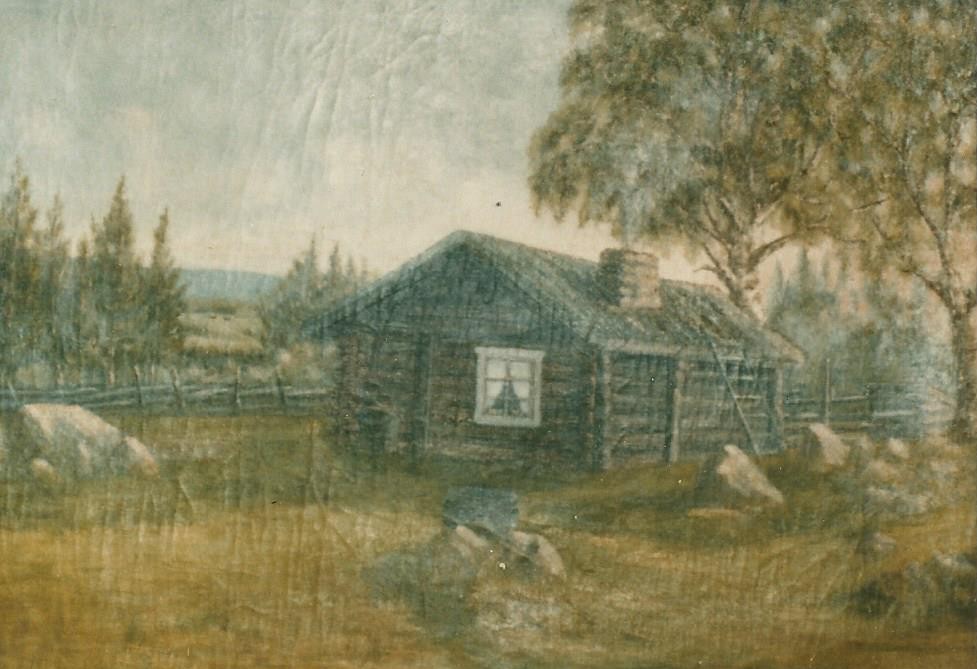
Karl Larsson Hallberg married Matilda Olofsdotter (1856–1929) in 1879. The young couple briefly lived at Notberg, Matilda’s family home, a cabin on Notberget mountain in Utterbyn, with Matilda’s twice-widowed father, for whom she had been caring since he had a stroke. But before long, Karl and Matilda were on the move. Karl, who, according to church records was a shoemaker, was probably looking for work in mining towns. They first moved to Jämtland in Northern Sweden. There their first child, Erika Desideria Hallberg, was born in 1880. Their son Karl Hjalmer Hallberg (Karl, the son, changed his given name to Carl when he became a United States citizen in 1931) was born in Los in Gävleborg County, in the eastern part of Sweden on January 4, 1882. By 1884, the family was back at Notberg in Utterbyn, where their second daughter was born that same year.
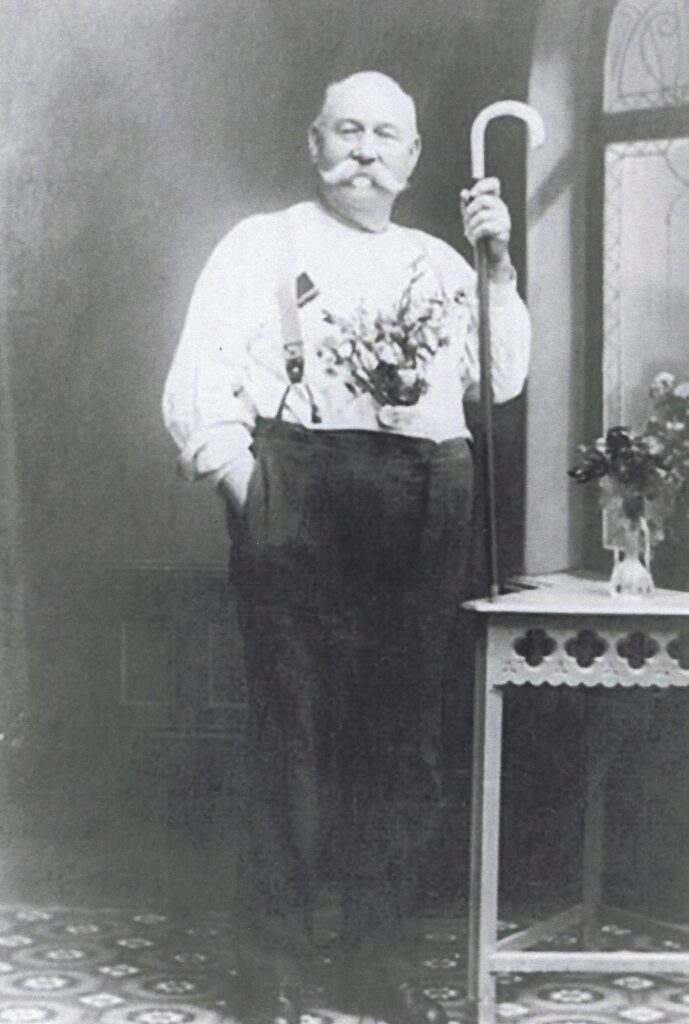
It appears that the father, Karl, continued to travel while Matilda stayed at Notberg and ran the farm and raised their children. One source indicates that Karl (the father) eventually became an itinerant photographer who signed his name simply “Carl Hallberg.” From 1902, when his son Carl emigrated, until 1907, he traveled most of the time. In 1907 Matilda once again joined her husband on his travels, but mid-trip, they decided that they were done “being together” and separated permanently. Matilda went back to Notberg, which she owned, and Karl (Carl) lived the rest of his life as a photographer near Stockholm. There is some evidence that Karl may have had a relationship with a younger woman for a time before dying in 1936 in a Stockholm nursing home.
The Persson-Nilsdotter Family
Bea Hallberg’s other paternal great-grandparents—the parents of her paternal grandmother, Matilda Olofsdotter Hallberg (1856–1929)—were Olof Persson (1822–1885) and Karin or Kari Nilsdotter (1814–1862). Olof Persson was born in 1822 at Jolfall, which was a tenant farm on Stommens land in Fryksände Parish. Stommens land was a large property with many tenant farms, owned by the Lutheran Church. Such church-owned lands were intended to provide income for the parish clergymen, called “priests” in those days. Stommens land continues to be owned by the church today. (Lennart Finnson, Alf Brorson, Håkan Larsson, Utterbyborna,Torsby, 2009, 162–163, 183–185) Karin was born in 1814 in Jämtland.
Olof, a master blacksmith, was apparently working in Jämtland when he and Karin met. Olof married Karin in Jämtland in 1845 when Olof was twenty-three and Karin was thirty-one. Their son Per Olofsson was born in Jämtland later in 1845. The family remained in Jämtland for another three years, then moved back to Jolfall in 1848, where their daughter Matilda Olofsdotter—Carl Hjalmer Hallberg’s mother—was born on April 8, 1856.
While Olof and Karin Persson’s home was at Jolfall, Olof’s occupation took him on extended travels and his family often joined him. Olaf worked for some time at the large Dannemora Mine in Uppsala County, Sweden. In the mid-1800s, Olof traveled around the country repairing tools at mines, smithing cannonballs and weapons to be shipped abroad, and making all sorts of iron tools and household goods needed on Swedish farms.
Matilda’s mother Karin died in 1862 at the age of forty-eight when Matilda was six years old. Less than two years later, Olof married his second wife Karin Jakobsdotter. After Matilda’s older brother left home, Matilda, her father, and her stepmother moved from Jolfall to Notberget mountain, to a small log stuga or cabin—which they perhaps built—on the mountainside overlooking the village of Utterbyn. They called the cabin Notberg. A few years after his second wife died, Olof suffered a stroke which left him partially paralyzed. Matilda, barely out of her teens, became his caregiver.

On October 26, 1879, at the age of twenty-three, Matilda married Karl Larsson Hallberg, who was twenty-one. Initially Karl may have been happy to move from his crowded home with thirteen brothers and sisters to live with his new wife and his aging father-in-law, but it wasn’t long before the young couple was on the road looking for work. Perhaps it didn’t seem so strange to Matilda, since she had traveled often with her parents. But constantly moving with their two children, Erika and Karl, who were both under the age of four, must have been difficult. In 1884 Karl and Matilda were back at Notberg where they had their second daughter and last child, Judit Karolina. But the whole family continued to travel frequently until the two eldest children were ready to start school. After that, Matilda and the children stayed at Notberg while Karl continued to travel for work.
Carl Hjalmar’s mother Matilda must have been a strong-willed, clever, capable, and resourceful survivor to live a hardscrabble life on a mountainside farm above Utterbyn, mostly without her husband’s help. Matilda’s farm, though rocky, grew multiple varieties of potatoes, had a small apple orchard, and probably a few farm animals. On the farm she managed to feed, clothe, support, and love her little brood to adulthood, undoubtedly with little or no help, financial or otherwise, from her wayward husband.
In the spring of 1927, when Beatrice was in college, Carl Hallberg arranged for transatlantic travel for himself and his mother Matilda. He traveled to Utterbyn, Värmland to get her, then together they boarded the ship Leviathan headed for New York. We do not know what prompted this journey, but clearly, Matilda would not have been able to travel to America by herself at her then advanced age whether she was in good health or not. It is presumed that she stayed at Carl and Anna’s home in Minneapolis for the next two years until she died in 1929. Matilda was the only grandparent Beatrice Hallberg ever met.
The Nilsson-Jonsdotter Family

The parents of Beatrice Hallberg’s maternal grandfather, Jon Persson, were Per Nilsson (1825–1914) and Kerstin Jonsdotter (1817–1893). Like Matilda Olofsdotter Hallberg’s mother, Kerstin was eight years older than her husband. Per and Kerstin’s marriage date is unknown. They had four children, including Jon Persson (1855–1916), father of Anna Jonsdotter Hallberg, and maternal grandfather of Beatrice Hallberg.
For generations before Kerstin and Per, their families, like most Swedish families, had followed the custom of giving their children a form of the father’s given or first name as the child’s surname. So, in the case of Kerstin and Per Nilsson’s children, their daughters’ surname was Persdotter and their sons’ surname was Persson. The father’s surname was dropped. Anna’s father was Jon Persson (1855–1916), his father was Per Nilsson (1825–1914), his father was Nils Persson (1789–?), and his father was Per Svensson (1759–?). (For help understanding Swedish surname customs, see “Swedish Surnames” in the “Lessons Learned” section of https://Tengens.net.)
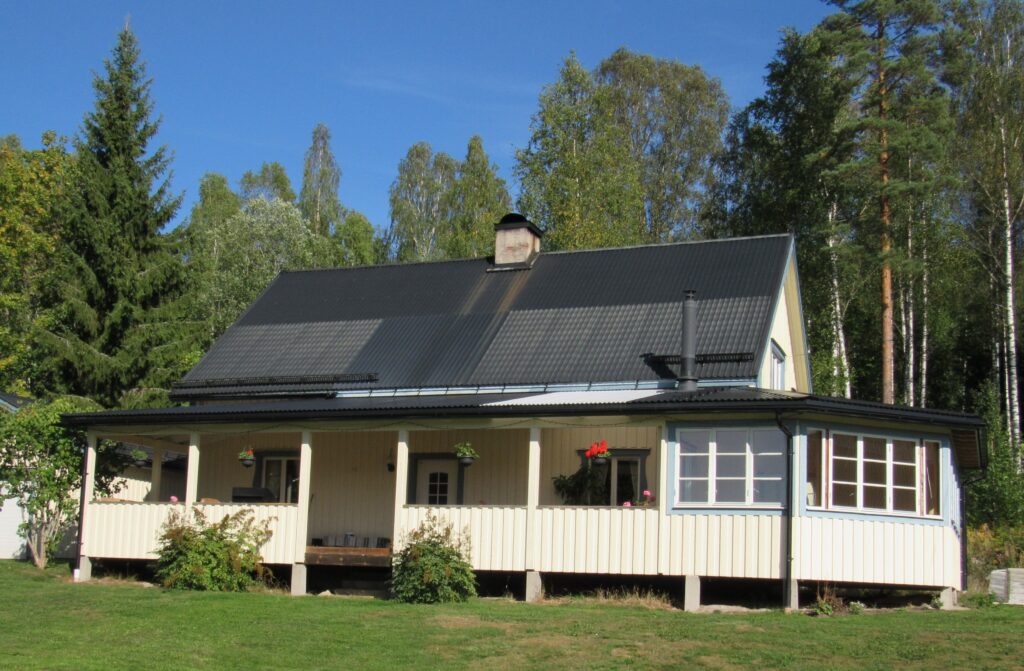
The history of Anna Jonsdotter Hallberg’s family home dates back to 1829, when Nils and Kerstin Olofsdotter Persson––the parents of Per Nilsson, Anna’s paternal grandfather––were given a piece of property in Utterbyn by Kerstin’s mother. Nils and Kerstin Persson left their farm in Persby, moved to the new property, built a log cabin, and began to farm the land. The land, located between Notberget mountain and the River Fryken, was ultimately called Näsgården or Näs. Näs means “tongue of land” and refers to the point poking into the nearby River Fryken on which the Nilsson’s land was located. It was considered to be a sizable piece of land—at least twelve acres. (Finnson et al, 130–131.)

Three of Nils and Kerstin Persson’s six children remained on the land, their son Per Nilsson (1825–1914) among them. In time Per inherited the farm, and married Kerstin Jonsdotter (1817–1893). Per became a “gentleman farmer” and his wife Kerstin a homemaker. After Per and Kerstin died their son—Anna’s father—Jon Persson (1855–1916), inherited Näsgården. Jon married Maria Lundell (1855–1933) the daughter of another landed Utterbyn family in 1877. They settled at Näs and raised their family there. Jon and Maria had eight children, seven girls and one boy. Beatrice’s mother Anna was the third eldest child. Neighbors called Anna and her six sisters the “Näs sisters” rather than the “Jonsdotter sisters,” so closely tied to Näs was the family.
It is hard to believe that this tiny home could have accommodated a family of ten. There is one bedroom on the main level (which may have been a sleeping alcove originally) and a rather spacious living area, plus an attic, where all eight children slept. The attic was accessed by an incredibly steep, ladder-like stairway tucked behind the built-in stove, The basic floorplan of the house remains essentially the same today.
The log house which the Perssons built nearly two hundred years ago still stands on the original site. Many years ago, the logs were covered with wooden siding and painted in the dark red typical of Swedish homes in the area. The house stayed in the family until 2001 when it was sold, but still to this day, Näs is part of the family identity.
The Lundell-Nilsdotter Family

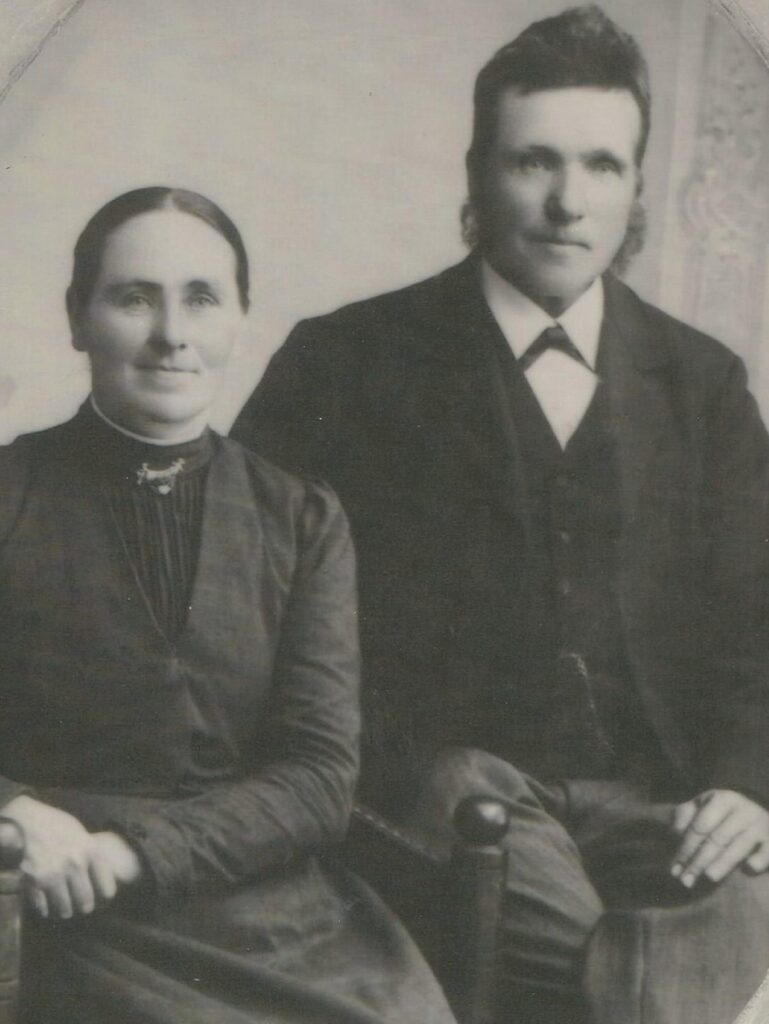
Beatrice Hallberg’s maternal grandfather, Jon Persson (1855–1916), eldest son of the landed Nilsson family, married Maria Persdotter Lundell (1855–1933) on July 22, 1877, in the Fryksände Parish Church, Torsby. Maria Lundell was the daughter of Per K. Lundell (1824–1893) and Kerstin Nilsdotter (1829–1914).
After their marriage, Jon and Maria Persson settled at Näsgården where they raised their family. Church records indicate Jon was a “Yeoman,” or a middle-class gentleman farmer who owned his own property.

Portrait in the collection of the Sahlstrom Garden Museum
Maria Lundell “fran Dommerangen” was descended from a long line of interesting characters. Maria’s paternal grandfather was Senior Judge Carl Gustav Persson Lundell, who owned a large home and property called Dommeran in Utterbyn, hence the designation “Maria Lundell fran Dommerangen.” (“Domare” is the Swedish word for “judge.”) Maria’s father Per inherited the house and property at age six when his father, the judge, died.
Maria, her parents, and siblings apparently all lived at Dommeran with her grandmother Marit Olofsdottter Lundell who was Judge Carl Gustav Lundell’s widow. Before Maria was born in 1853, her great-uncle Nils Peter Lundell, Judge Carl Lundell’s brother, and his daughter Kajsa Stina Lundell and her new husband, Karl Samuel Sahlstrom, lived at Dommeran from 1843 to 1850. Karl Sahlstrom was descended from the French physician named Grégoire François Du Rietz who had attended Queen Kristina of Sweden in the mid-1600s. In the Lundell family we have four instances in which a family member married into the Sahlstrom clan, which is directly descended from the Du Rietz. Apparently many—perhaps a majority—of Fryksände Parish residents, both current and past, claim some sort of relationship to the famous Dr. Du Reitz, including our grandmother Anna Elisabet Jonsdotter Hallberg.
Maria Lundell Persson’s grandfather, the judge, is not the only Lundell who had some education and a paying occupation. The family ancestry is dotted with attorneys, mayors, an innkeeper/postal clerk, baliffs, parish ministers, church bell-ringers and sextons (klockare), representatives to the Swedish legislature, and more.
It was not until Anna and Carl’s generation that children in Sweden were required to attend school at all, and then it was only through the sixth grade. While Carl and Anna Hallberg had a limited education, it was enough for two smart, ambitious young people to find their way to the United States and then to Minneapolis. There Carl settled into a good trade and they bought a house where they raised and educated their two daughters. They both learned English and became United States citizens. And perhaps most important to them, they saw their three granddaughters grow up, go to college, and build good lives for themselves. Despite the untimely and tragic death of their younger daughter Beatrice, Carl and Anna Hallberg built and lived the quintessential American success story.
Visit our Ancestry.com family tree here.