
Grandma Baker’s Classic Sage and Onion Stuffing Recipe
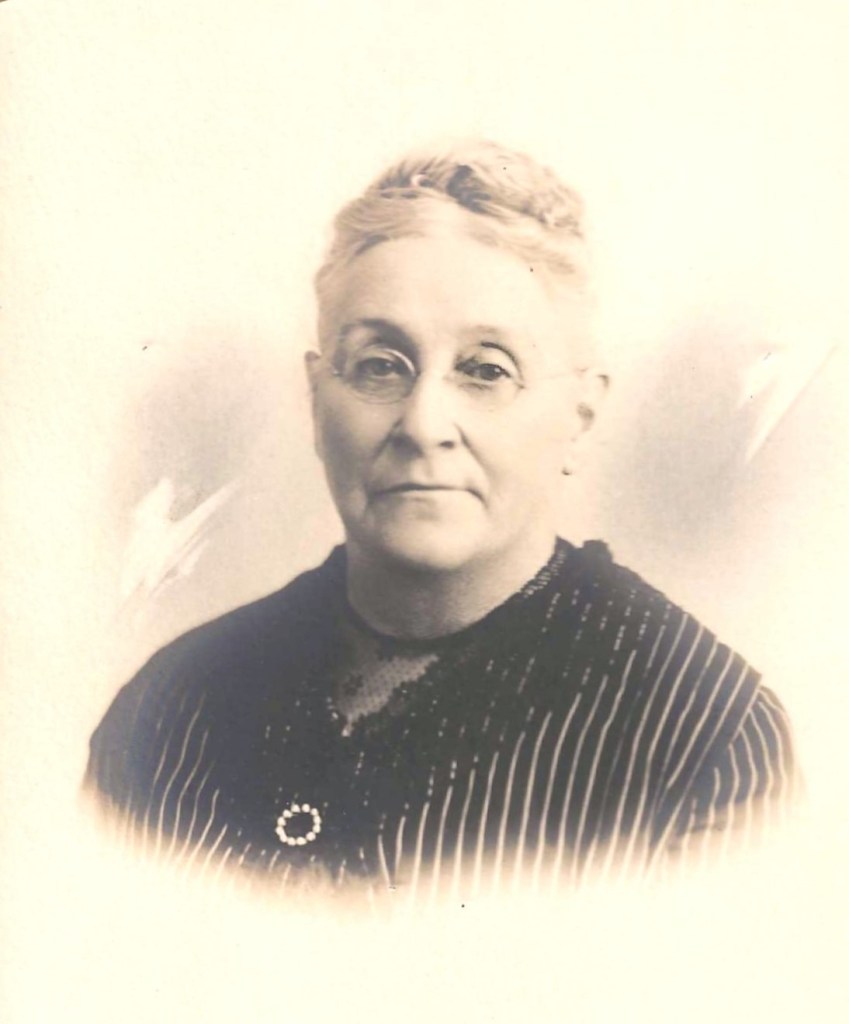
Our maternal great-grandmother, Margaret Ann Young Baker (1844–1938), brought this classic sage and
onion stuffing recipe to Minneapolis in the early 1890s when she and her family moved there from Missouri. The beauty of this recipe is its adaptability. Almost everyone loves the blended flavors in sage and onion stuffing, whether they are turkey lovers or not. If you roast it outside of the bird, it’s vegetarian. And, if you want to reduce the fat content, you can replace some of the butter with broth — vegetarian broth if you want to keep the vegetarians in your crowd happy — or chicken or turkey broth if your non-turkey eaters are not purists.
Maggie, as she was known, was a fantastic cook and baker. She passed her culinary skills and recipes on to her daughter, our grandmother, Cora Baker Goodrich, and our mother, Jean Goodrich Tifft. We still make Grandma Baker’s sage and onion stuffing every Thanksgiving — five generations later.
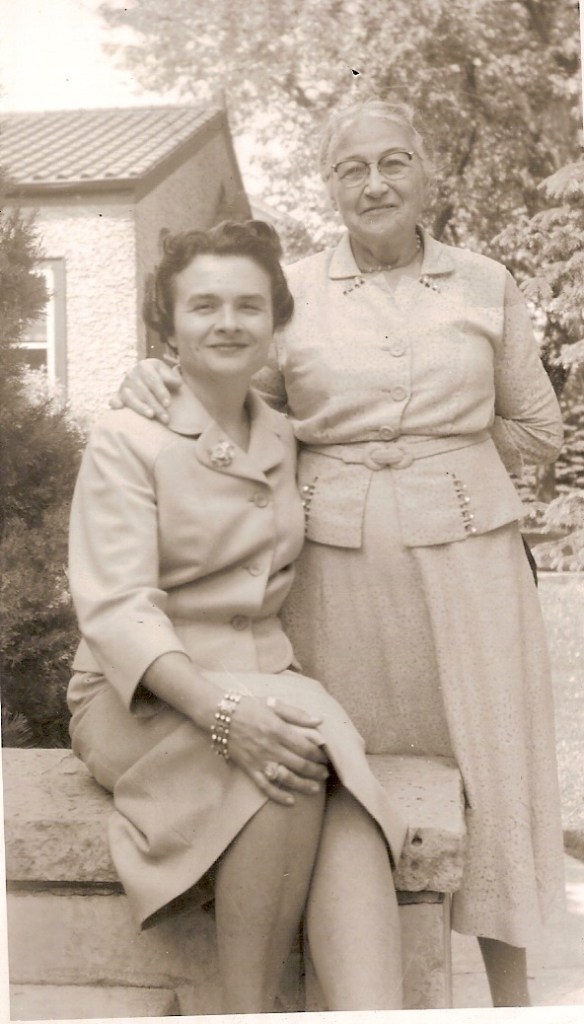
Thanksgiving dinner is one of the highlights of our culinary year, and Grandma Baker’s sage and onion stuffing is still the pièce de résistance. In fact, it’s a joke in our family that if our future husbands didn’t like Grandma Baker’s turkey stuffing, they could forget marrying us. To a man, they accepted the challenge. Who knows if it’s love or compatible tastes? My fiancé liked Grandma Baker’s stuffing so much that we served it to our families at the first Thanksgiving we hosted as a couple — two days before our wedding! His mother’s comment was, “There’s no celery.” And there never will be; the main ingredients in our classic sage and onion stuffing are sacrosanct!
On Thanksgiving Day 2023, as I was making Grandma Baker’s stuffing, it occurred to me that some of you might be interested in the recipe. It’s classic, still delicious, and easier than ever to make today.
A Bit of Thanksgiving History
Contrary to what many of us learned in grade school, Thanksgiving Day wasn’t invented by the Pilgrims at Plymouth plantation in 1620. While it is true that the Pilgrims would probably not have survived that first brutal year in Plymouth—and many didn’t—without the help of the friendly Wampanoag tribe, the Pilgrims didn’t throw a big bash and invite their buddies, the Wampanoag, to partake of their generosity and give thanks to the English God. If anything, it was the opposite: the Wampanoag likely brought the entrées, not just the sides.
Thanksgiving started in 1789 when President George Washington, at the request of Congress, issued a proclamation declaring a day of thanksgiving. It was celebrated on and off until 1863 when President Abraham Lincoln, at the height of the Civil War, declared the last Thursday in November as a day to praise God, and “implore the interposition of the Almighty hand to heal the wounds of the nation.” In 1870, President Ulysses S. Grant signed the Holidays Act into law, making Thanksgiving a federal holiday in Washington, D.C., and in 1885 it became a paid holiday for all federal workers in the United States. In 1939, President Franklin D. Roosevelt moved the holiday one week earlier, and finally, in 1942, Congress established a permanent day—the fourth Thursday of the month—the day we continue to celebrate today.
Maggie and Elijah Baker’s Story
Maggie Young, married her sweetheart Elijah Baker (1842–1897) in September 1865, soon after he was mustered out of the Union Army at the end of the Civil War. Elijah was born in Darlington, Ontario, and Maggie in nearby Bowmanville. The towns are located about seventy-five miles east of Toronto on the shore of Lake Ontario. The Young and Baker families migrated from Ontario to Rockton, Illinois, in the early 1850s when Maggie and Elijah were children. Maggie recalled in later years that when she was growing up, Indigenous people still lived around Rockton and would occasionally come to the door in search of a meal, which her mother always gladly provided.

While we can be quite sure that Maggie Young Baker’s sage and onion stuffing recipe dates to early in her marriage, it is likely that it was actually her mother’s recipe, making it close to one-hundred-seventy-five years old. Rockton was on the frontier in the 1850s, so it isn’t hard to imagine that the turkeys were wild, the bread was homemade, the onions and sage were grown in the kitchen garden, and the butter was churned from milk from the family cows. Maggie and Nancy had no electric stoves or microwaves, but I’ll bet they had giant mixing bowls and wooden spoons very much like mine! This brings us to Grandma Baker’s stuffing recipe.
Grandma Baker’s Sage and Onion Stuffing Recipe
Ingredients:
You can scale this recipe up or down depending on the size of your crowd and their appetites for Thanksgiving dinner.
- Two 24 oz. loaves of white sandwich bread, torn in pieces. Look for bread that has 2 grams of sugar, or less per slice. Don’t use commercial stuffing mix—it just isn’t as good.
- Two large yellow onions peeled and roughly chopped into one-half-inch pieces.
- At least 0.2 oz. (1/2 bottle) of dried sage leaves (preferably not ground or rubbed), or about a cup of fresh, dried sage leaves (see below).
- A pound of salted butter melted and cooled, but not browned. Do not substitute margarine.
- At least two cups of low-sodium chicken or vegetable broth. You can find broth with varying degrees of sodium, depending on your preference.
- Pepper to taste. Frequent tasting is encouraged!
Directions for Grandma Baker’s sage and onion turkey stuffing (and a vegetarian version too):
The first Thanksgiving that I made Grandma Baker’s sage and onion stuffing and cooked a turkey, I kept my mother on the phone for several hours to get all of her tips and tricks. My son still calls me almost every year to check the recipe, even though he’s been making it
for at least fifteen years. It’s simple to make, but the tricks and tips that we’ve accumulated over the generations are as important as the ingredients. So, please forgive the long narrative.
The key to the sage and onion stuffing recipe is using stale sandwich bread. I’ve become fussy about the bread I use because I’ve had a couple of disasters when I used the wrong bread. A couple of times I used bread with too much sugar in it, and once I used baguettes that proved to be too crusty.
At least a week before Thanksgiving, get two 24-ounce loaves of white sandwich bread, with as little sugar as possible. I choose bread that has two grams of sugar or less per slice. A lot of sandwich bread has more sugar, and the sugar flavor will come through in the baked stuffing. (Yuck—I learned that the hard way.) Use sandwich bread rather than fancy bread. I used a couple of baguettes I had in the freezer during the pandemic; they just didn’t absorb the butter and flavors well, and the crusts never softened up.
1. Preparing the bread:
At least three days before you make the stuffing, tear the bread into roughly two-inch pieces and place it in several shallow roasting pans. Don’t cut the bread. The rough edges of torn bread seem to absorb the flavors better. It’s not necessary to be neat, and the pieces don’t need to be uniform. Larger pieces work just as well as smaller ones. You can and should use the heels and crusts.
Cover the pans loosely with a lightweight dishcloth to keep the dust out while letting it get stale, and put them in a dry, out-of-the-way place. (We call this process “staling” at our house.) Once or twice a day, turn the bread over so it gets dry on all sides. It’s stale enough if you wouldn’t consider making a sandwich or even toast out of it, but it’s not yet crispy. If your bread isn’t stale enough the day before making the stuffing, heat the oven to about 200 degrees, then turn it off, and put the pans of bread, uncovered, in the oven until you’re ready to make
the stuffing. Turn the bread several times when it’s drying in the oven.
2. Preparing the sage:
If I use commercial sage, I prefer to use whole leaf rather than rubbed sage. But if you’re a purist, you might want to try growing your own. It’s easy to grow, and I recommend it for the future. I’ve had great success growing it in Virginia, New Mexico, and Minnesota. If you start with fresh sage, it needs to be dried before using it. Plan to dry it for at least three weeks in a clean, dry place. It is best if you hang it in bunches so air can reach all sides. It should crumble when dry enough to use. When you’re ready to use the sage, take the leaves off the stem and rub them in your hands to break the leaves up into small pieces. Remove remaining stems.
3. Making the stuffing:
You can make this stuffing a day ahead if you have a cool place to store it. If you’re going to do this, I recommend adding the butter, but not the broth before you store it. Living in Minnesota, I sometimes put it on my screened porch but never where the squirrels can get to it! We once lost my mother’s Thanksgiving pies to the squirrels when we put them on the back steps to keep them cool.
- Combine the bread, onions, and sage in a large mixing bowl.
- Melt the butter in a saucepan on low heat. Take it off the heat when it’s melted. Do not let the butter brown.
- Add about half of the melted and slightly cooled butter to the dry ingredients. Mix with a large spoon or your hands. As you mix, bring the sage and onions up from the bottom of the bowl.
- Add the rest of the butter and a few grinds of fresh pepper and mix again. Don’t overdo the pepper. Unless you like very salty food, do not add any salt. In-the-bird stuffing always seems to get saltier as it roasts, especially if you are rubbing the turkey cavity with salt or using a brined turkey.
- Mix again, and taste. If the sage flavor is coming through, you’ve probably added enough. But if you are sage freaks like us—then feel free to add more.
- It’s hard to overdo the sage, but you can underdo it; then the stuffing tastes like buttered bread. So don’t be shy.
4. Adding the broth:
Many years ago, I started adding broth to the stuffing to reduce the amount of butter I needed to get the stuffing to the right consistency for baking. In-the-bird stuffing requires less moisture than out-of-bird stuffing, so this step is important and should be done shortly before you’re going to use the stuffing.
- If you plan to stuff the turkey, separate out enough stuffing to fill both the chest and neck cavities. Three to four cups should be enough for a fifteen-pound turkey.
- Add just enough chicken broth to the in-the-bird stuffing to make it the consistency of a wrung-out sponge. It should be damp but not mushy or dripping. The turkey will add moisture to the stuffing as it roasts. If you are concerned about sodium or don’t like salty food, use unsalted or low-sodium broth.
- If you rub salt on the inside of your turkey or you brine it, you won’t need to add any salt to the in-the-bird stuffing. But if you want to add salt, be sparing and salt after you’ve combined all of the ingredients. Put the in-the-bird stuffing aside until you are ready to stuff the turkey and roast it. Food safety experts suggest not stuffing your turkey until you are ready to put it in the oven to roast.
- If you are making both vegetarian and non-vegetarian out-of-bird stuffing, divide the remaining stuffing into two pans. Add enough low-sodium chicken or vegetarian broth and mix to make the bread wet but not mushy. The bread should maintain its form but be more moist than the in-the-bird stuffing. You will bake this covered, so it needs enough moisture to steam without drying out.
- After you’ve added the broth, you may want to add a small amount of salt to the out-of-bird stuffing but be sparing.
5. Baking the out-of-bird stuffing
I like to leave the stuffing at room temperature in a covered roasting pan or casserole dish for at least two hours to let the flavors meld. In other words, I make the stuffing first, then stuff the turkey and start it roasting, and leave the out-of-bird-stuffing to rest before baking it. This is the time when a lot of taste-testing happens at my house. There are always willing tasters to help me adjust the moistness and the amount of sage.
About an hour before serving dinner, put the foil-covered pan or covered casserole dish into a 350-degree oven and bake for about twenty minutes, then check for steam—a sure sign it’s moist enough. If it’s not steaming, you can sprinkle a bit more broth over the top and recover the pan to continue baking. After another twenty minutes, remove the cover and bake for another fifteen to twenty minutes to let the stuffing brown. It should get a bit crunchy and brown on top but still be moist under the crunchy top. In the meantime, the stuffed and roasted turkey is resting quietly on the cutting board, awaiting its fate.
Enjoy! If you have any questions, be sure to ask them before Thanksgiving Day—I’ll be busy making Grandma Baker’s sage and onion stuffing.